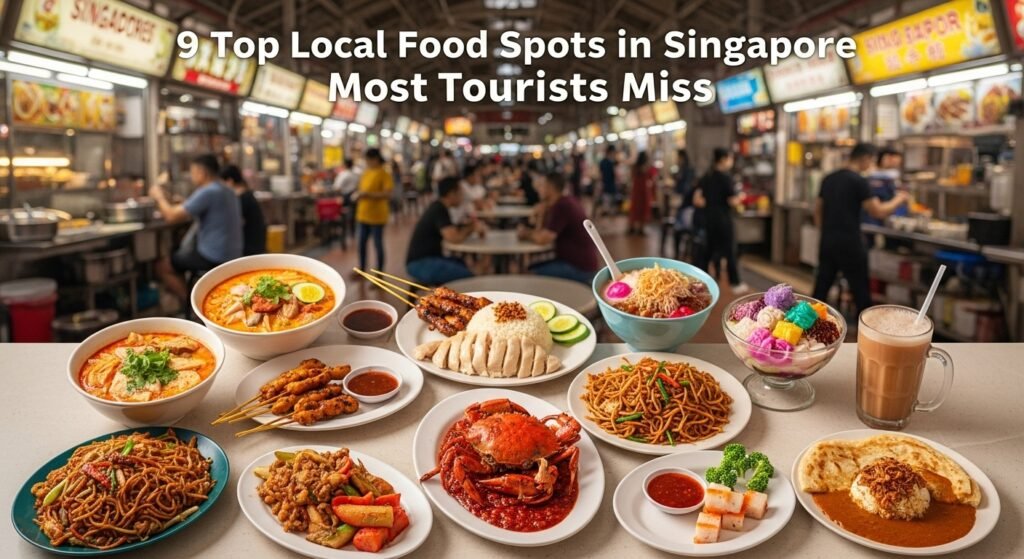
Local food spots in Singapore are neighbourhood eateries and hawker stalls where locals eat daily, often hidden in residential areas rather than tourist zones. These places focus on flavour, tradition, and affordability, serving dishes that reflect Singapore’s multicultural food heritage. Unlike popular tourist food spots, local food places are usually family-run, have limited menus, and rely on word-of-mouth rather than online hype.
Exploring local food spots in Singapore gives a more authentic view of how the city eats, from early-morning hawker breakfasts to late-night supper stalls. Many of these food spots are found in heartland areas such as Bedok, Tampines, Geylang, and Toa Payoh, where recipes are passed down through generations. For travellers and residents alike, these local food spots offer genuine Singapore flavours that are easy to miss if you only follow mainstream food guides.
Why Tourists Miss These Local Food Spots
Most tourists stay near Orchard, Marina Bay, or Sentosa. Their food choices naturally follow their location. But Singapore’s real food culture lives in the heartlands areas like Bedok, Tampines, Geylang, Toa Payoh, and Ang Mo Kio, where hawker food often tastes better than restaurant food.
Here’s why these places are often overlooked:
- They are far from MRT interchanges tourists use most
- Many stalls have no English menus or social media presence
- Operating hours are short and inconsistent
- Food is designed for locals, not presentation
Yet, these exact reasons are what make them special.
What Local Food Spot Really Means in Singapore
A local food spot is not defined by popularity online. It is defined by routine.
These places usually:
- Serve the same dish every day
- Have long queues made up mostly of residents
- Close when food runs out
- Focus on flavour, not branding
In many cases, the person cooking today learned directly from a parent or grandparent.
Comparison Table Of 9 Top Local Food Spots in Singapore Most Tourists Miss
| # | Food Spot | Area | Signature Dish | Best Time to Visit | Avg Price (SGD) | Crowd Type | Why Tourists Miss It |
|---|---|---|---|---|---|---|---|
| 1 | Bedok 85 Bak Chor Mee | Bedok North | Bak Chor Mee | Night | 4–6 | Mostly locals | Late-night hours, far from tourist zones |
| 2 | Old Airport Road Lor Mee | Kallang | Lor Mee | Morning–Afternoon | 4–5 | Elderly & residents | Traditional dish, low online presence |
| 3 | Geylang Lor 9 Beef Kway Teow | Geylang | Beef Kway Teow | Late night | 6–8 | Local regulars | Geylang area misunderstood by tourists |
| 4 | Tanglin Halt Western Food | Queenstown | Chicken/Pork Chop | Evening | 5–7 | Families | Old hawker centre, no branding |
| 5 | Tampines Round Market Nasi Lemak | Tampines | Nasi Lemak | Early morning | 3–5 | Neighbourhood crowd | Early hours, residential location |
| 6 | Changi Village Hokkien Mee | Changi | Fried Hokkien Mee | Night | 5–7 | Night diners | Late hours, outside city centre |
| 7 | Toa Payoh Central Rojak | Toa Payoh | Rojak | Afternoon | 3–5 | Mixed locals | Dish unfamiliar to tourists |
| 8 | Ang Mo Kio Teochew Porridge | Ang Mo Kio | Teochew Porridge | Dinner–Late night | 6–10 | Families & seniors | Plain-looking food, no hype |
| 9 | Eunos Crescent Fish Soup | Eunos | Fish Soup | Lunch | 5–7 | Office workers | Simple presentation, low visibility |
1. Bedok 85 Bak Chor Mee
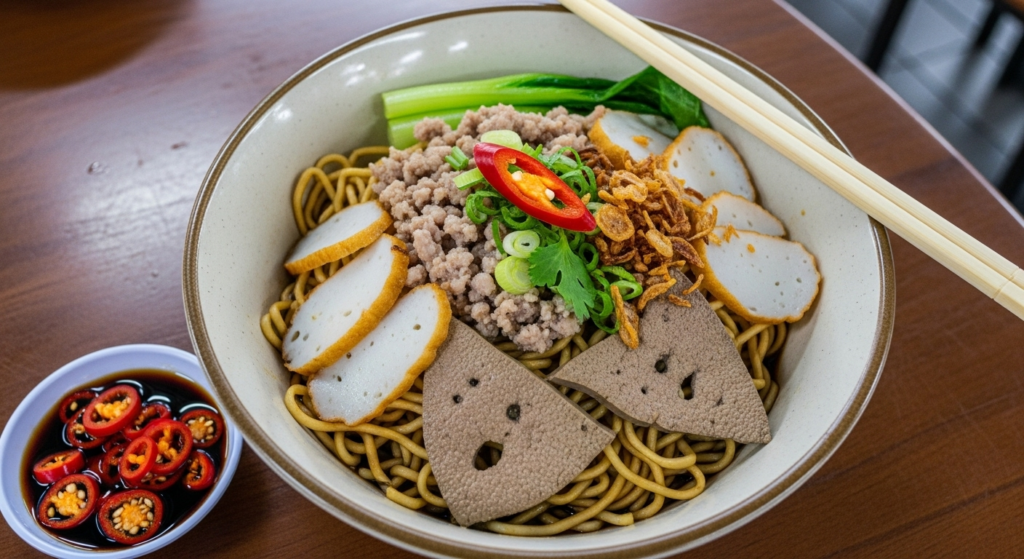
Bedok 85 is well known to locals, but tourists rarely venture here at night. The bak chor mee stalls operate late, drawing residents after work or family dinners.
What makes it special is the balance vinegar, chilli, pork lard, minced meat, and springy noodles. Locals customise their bowls, adjusting spice and vinegar levels with ease.
Best time to visit: After 8 pm
Price range: SGD 4–6
Why locals love it: Comfort food after long days
2. Old Airport Road Lor Mee Stall
Old Airport Road Food Centre has fame, but specific stalls like traditional lor mee remain under-explored by visitors.
This lor mee features thick gravy made from slow-cooked stock, topped with braised pork, garlic, and vinegar. It is heavy, savoury, and deeply satisfying.
Best time to visit: Morning to early afternoon
Price range: SGD 4–5
Why locals love it: Old-school taste rarely found today
3. Geylang Lor 9 Beef Kway Teow
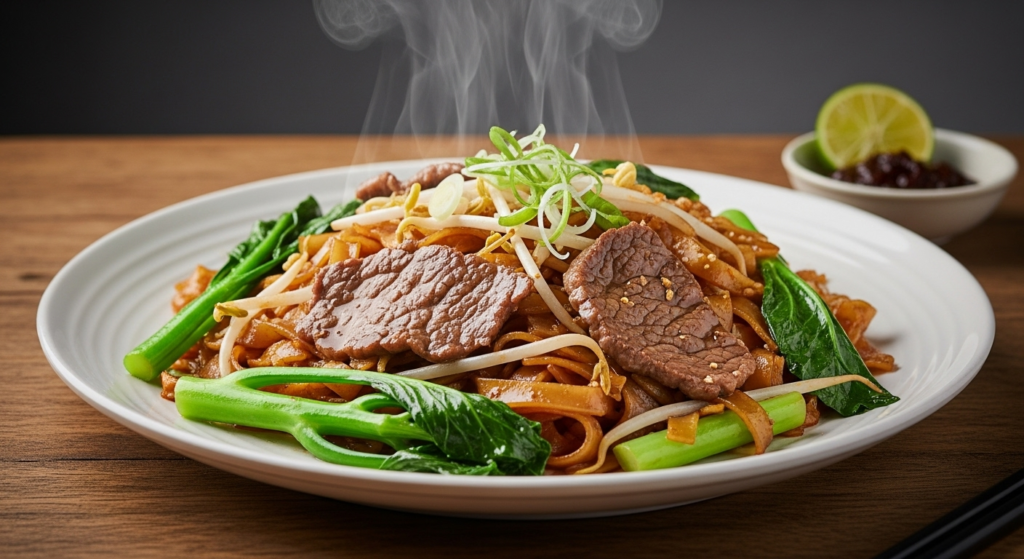
Geylang is often misunderstood by tourists, but locals know it as a food haven. Many dishes here form part of Singapore’s most famous traditional food dishes.
The stall has been around for decades, and regulars order without looking at the menu.
Best time to visit: Late evening
Price range: SGD 6–8
Why locals love it: Deep beef flavour and consistency
4. Tanglin Halt Western Food
This is Western food through a local lens chicken chops, pork cutlets, and lamb served with thick gravy and no frills.
The stall sits quietly in a neighbourhood hawker centre and is often run by elderly hawkers who have cooked the same dishes for decades.
Best time to visit: Dinner hours
Price range: SGD 5–7
Why locals love it: Nostalgic, hearty portions
5. Tampines Round Market Nasi Lemak
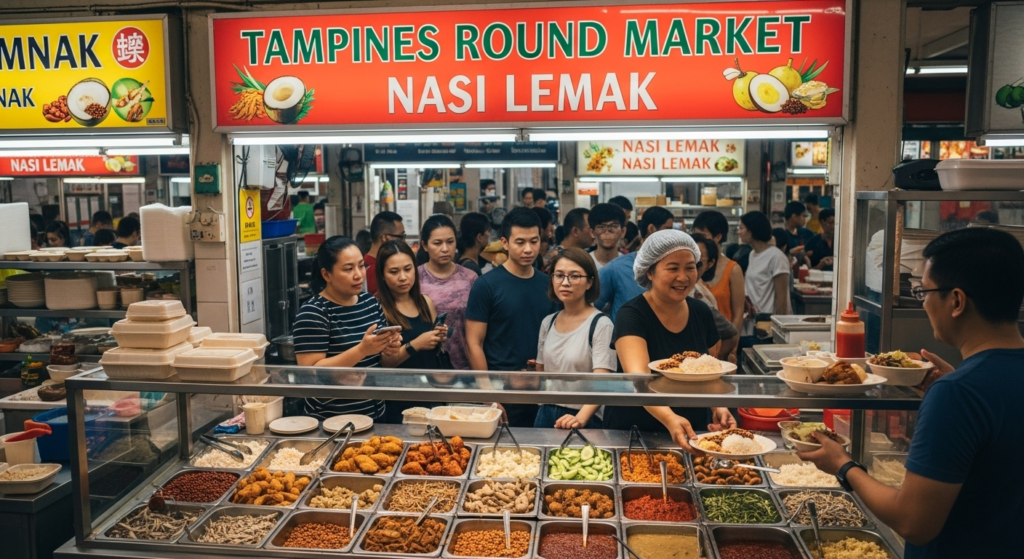
Unlike famous nasi lemak chains, this version is simpler and closer to what locals eat at home. Coconut rice, sambal, fried chicken, and egg served without gimmicks.
Residents queue early, especially on weekends.
Best time to visit: Early morning
Price range: SGD 3–5
Why locals love it: Balanced flavours, affordable pricing
6. Changi Village Fried Hokkien Mee
Changi Village attracts some tourists, but many miss the late-night food stalls where locals gather.
This Hokkien mee is fried over high heat, using pork and prawn stock that gives the noodles a smoky depth.
Best time to visit: After 9 pm
Price range: SGD 5–7
Why locals love it: Wok hei and generous portions
7. Toa Payoh Rojak Stall
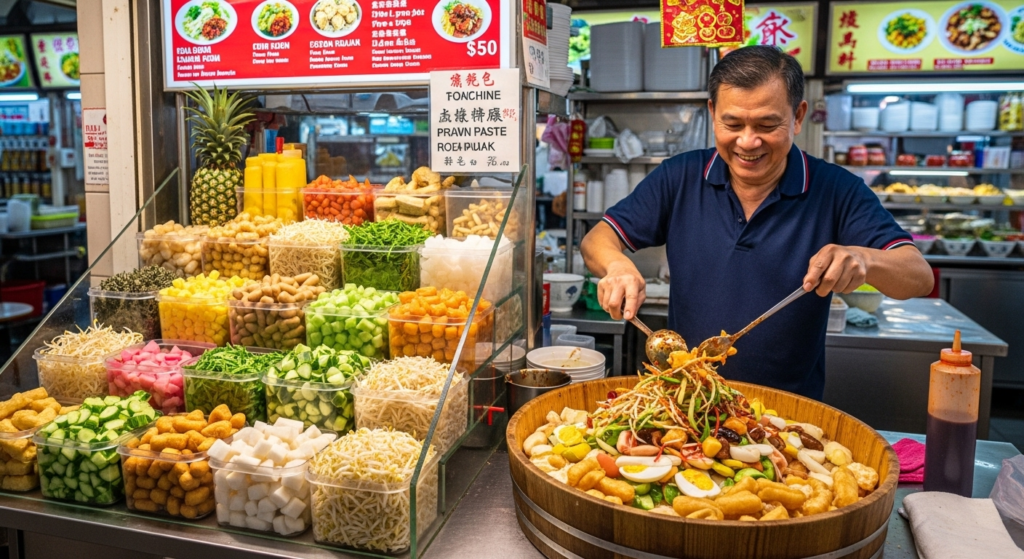
Rojak is a dish many tourists avoid because it looks unfamiliar. Locals, however, treasure a good rojak stall.
This one balances sweetness, spice, and crunch perfectly, using fresh ingredients and well-fermented prawn paste.
Best time to visit: Afternoon
Price range: SGD 3–5
Why locals love it: Complex flavours done right
8. Ang Mo Kio Teochew Porridge
This is comfort food at its most basic. Plain porridge served with multiple side dishes — braised vegetables, steamed fish, salted egg, and preserved vegetables.
Locals come here for quiet meals, often late at night.
Best time to visit: Dinner to late night
Price range: SGD 6–10
Why locals love it: Light, comforting, customisable
9. Eunos Crescent Market Fish Soup
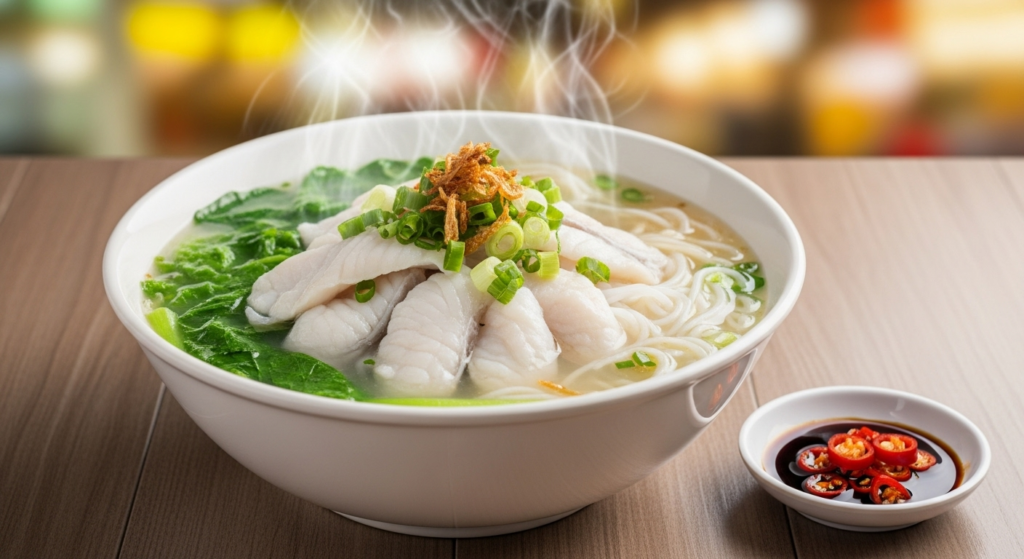
Fish soup stalls are everywhere, but locals know which ones are worth visiting. This stall highlights why simple dishes dominate Singapore hawker food when done well.
Slices of fish are cooked only after ordering, preserving texture and flavour.
Best time to visit: Lunch hours
Price range: SGD 5–7
Why locals love it: Clean taste and quality ingredients
Summary of Local Food Spots
| Food Spot | Area | Signature Dish | Best Time |
|---|---|---|---|
| Bedok 85 | Bedok | Bak Chor Mee | Night |
| Old Airport Road | Kallang | Lor Mee | Morning |
| Geylang Lor 9 | Geylang | Beef Kway Teow | Late Night |
| Tanglin Halt | Queenstown | Western Food | Evening |
| Tampines Round Market | Tampines | Nasi Lemak | Morning |
| Changi Village | Changi | Hokkien Mee | Night |
| Toa Payoh Central | Toa Payoh | Rojak | Afternoon |
| Ang Mo Kio | Ang Mo Kio | Teochew Porridge | Late Night |
| Eunos Crescent | Eunos | Fish Soup | Lunch |
What Makes These Places Truly Local
These food spots share several common traits:
- Family-run operations
- Recipes passed down through generations
- No aggressive marketing
- Focus on repeat customers, not tourists
Locals value consistency more than novelty. That is why many stalls resist expansion or franchising.
Local vs Tourist Focused Food Spots
| Aspect | Local Food Spots | Tourist Food Spots |
|---|---|---|
| Location | Heartlands | City centre |
| Pricing | Low and stable | Higher |
| Menu | Limited, focused | Broad |
| Marketing | Word of mouth | Social media |
| Customer base | Residents | Visitors |
Tips for Eating Like a Local in Singapore
If you want to experience these places properly, keep these tips in mind:
- Visit during off-peak hours
- Bring cash
- Don’t rush orders
- Observe what locals order
- Be patient with queues
Eating like a local is about respect and curiosity, not speed.
Are These Places Worth Visiting as a Tourist
Yes if your goal is authenticity.
No if you only want convenience or social media photos.
These places are about flavour, history, and everyday Singapore life.
Who Will Enjoy These Food Spots Most
| Traveller Type | Recommended |
|---|---|
| Food explorers | Yes |
| Cultural travellers | Yes |
| Luxury travellers | No |
| First-time visitors (short trip) | Selectively |
| Long-stay visitors | Strongly yes |
Conclusion
Singapore’s food culture is not limited to famous hawker centres or Michelin mentions. It lives quietly in neighbourhoods, shaped by routine, memory, and community.
By visiting these local food spots, you gain more than a meal you gain insight into how Singaporeans live and eat.
At Singapore East, we believe the best food stories are found where locals return again and again, not where cameras gather.
FAQs
1.What are local food spots in Singapore?
Local food spots in Singapore are neighbourhood hawker stalls, kopitiams, and small eateries where residents eat daily. These places focus on consistent flavours, affordability, and traditional recipes rather than tourist appeal or social media popularity.
2.Why do most tourists miss these food spots?
Most tourists stay near central areas and follow popular online food guides. Many local food spots are located in residential neighbourhoods, operate limited hours, and lack online promotion, making them easy to miss for visitors.
3.Are local food spots in Singapore safe and hygienic?
Yes. Singapore enforces strict food hygiene regulations across all hawker centres and food stalls. Even lesser-known neighbourhood stalls must meet official cleanliness and safety standards.
4.Is local food in Singapore affordable for tourists?
Local food spots are among the most affordable dining options in Singapore. Most meals range between SGD 3 and SGD 7, offering excellent value compared to tourist-focused restaurants.
5.Do these local food spots have English menus?
Some stalls may have limited or no English menus. However, many dishes are visible at the stall, and hawkers are generally helpful if you point or ask politely.
6.What is the best time to visit local food spots in Singapore?
The best time depends on the dish. Breakfast items sell out early, while dishes like bak chor mee or Hokkien mee are more popular in the evening or late at night. Visiting outside peak lunch hours helps avoid queues.
7.Are these food spots suitable for first time visitors to Singapore?
Yes, especially for travellers interested in authentic local culture. However, visitors with limited time may want to select only a few spots that fit their itinerary.
8.Do locals really eat at these places regularly?
Yes. These food spots rely heavily on repeat customers from nearby neighbourhoods. Many locals visit the same stall weekly or even daily.
9.Is cash required at local food spots in Singapore?
Many neighbourhood stalls still prefer cash, although some now accept digital payments. Carrying small cash amounts is recommended.
10.How can tourists find more hidden local food spots in Singapore?
Exploring residential neighbourhoods, observing local queues, and reading neighbourhood-focused guides like those on Singapore East are effective ways to discover authentic food spots.