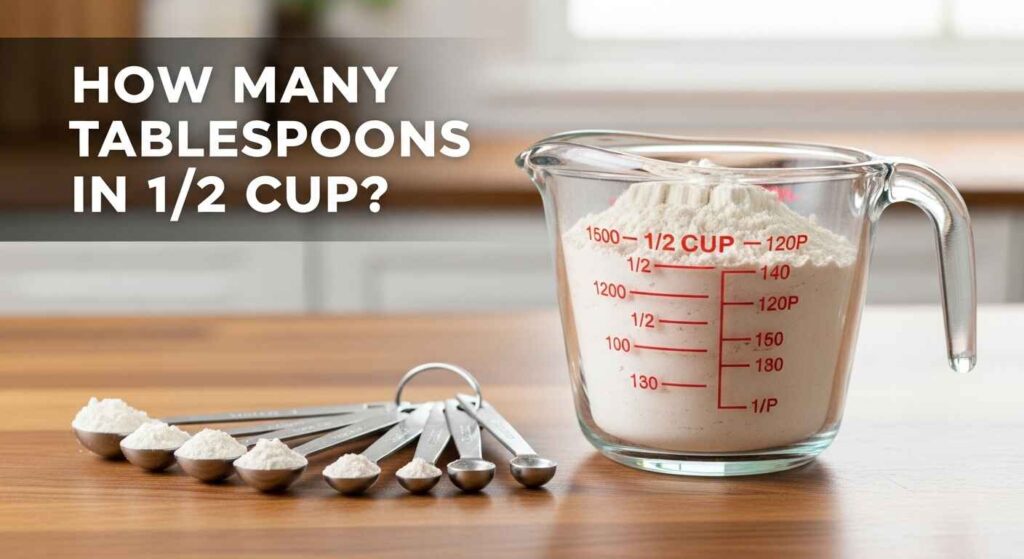
One–half cup equals 8 tablespoons. This modification appears frequently in recipes, and many people still pause to verify it. Knowing the number makes cooking and baking easier, especially if you can’t find the right measuring cup. A tablespoon works just fine when you know how many scoops to take.
Brief Conversion for 1/2 Cup
Many recipes call for 1/2 cup, and knowing how it translates into tablespoons, teaspoons, or millilitres saves you time in the kitchen. Instead of stopping midway through a recipe to search online, you can rely on a simple chart that gives you the numbers at a glance. This small detail makes your cooking process smoother and more enjoyable.
| Cups | Tablespoons | Teaspoons | Millilitres |
| 1/4 cup | 4 tbsp | 12 tsp | 60 ml |
| 1/2 cup | 8 tbsp | 24 tsp | 120 ml |
| 3/4 cup | 12 tbsp | 36 tsp | 180 ml |
| 1 cup | 16 tbsp | 48 tsp | 240 ml |
How to Measure Without a Cup?
Not everyone has a complete set of measuring tools at home, and sometimes the one you need is missing. That doesn’t mean you can’t keep cooking. With just a tablespoon, teaspoon, or even a jug, you can still measure 1/2 cup accurately. These quick swaps help you stay on track without having to pause your recipe.
| Tool | What to Use for 1/2 Cup |
| Tablespoon | 8 scoops |
| Teaspoon | 24 scoops |
| Measuring jug | 120 ml |
Other Common Cup Conversions
While 1/2 cup is often used, many recipes also employ other fractions, such as 1/4, 1/3, or 2/3. Learning these conversions makes cooking easier because you can use any spoon or jug available. Instead of worrying about exact cups, you can measure quickly with the tools you have.
| Cups | Tablespoons | Teaspoons | Millilitres |
| 1/8 cup | 2 tbsp | 6 tsp | 30 ml |
| 1/4 cup | 4 tbsp | 12 tsp | 60 ml |
| 1/3 cup | 5 tbsp + 1 tsp | 16 tsp | 80 ml |
| 2/3 cup | 10 tbsp + 2 tsp | 32 tsp | 160 ml |
| 3/4 cup | 12 tbsp | 36 tsp | 180 ml |
| 1 cup | 16 tbsp | 48 tsp | 240 ml |

Differences in Cup Sizes by Country
One reason recipes can feel confusing is that cups don’t always mean the same thing in every country. The difference may look small, but in baking, it can change the final result. Knowing whether your recipe uses US, UK, or Australian measurements helps you follow instructions more accurately.
| Country | 1 Cup in Millilitres |
| United States | 240 ml |
| United Kingdom | 250 ml |
| Australia | 250 ml |
Tablespoons to Grams Conversion
When recipes list ingredients in grams instead of cups or spoons, things can get tricky. A tablespoon doesn’t weigh the same for every ingredient because flour, sugar, butter, and oil all have different densities. Understanding these differences makes it easier to follow weight-based recipes and improves your results in baking.
| Ingredient | 1 Tablespoon | 1/2 Cup (8 tbsp) |
| Flour | 8 g | 64 g |
| Sugar | 12.5 g | 100 g |
| Butter | 14 g | 112 g |
| Oil | 13.5 g | 108 g |
Final Note
One–half cup equals 8 tablespoons, 24 teaspoons, or 120 millilitres. This simple number helps you measure correctly even when the right cup isn’t around. With the tables above, you now have a handy reference for cups, spoons, millilitres, and even grams. Keep it close by and you’ll never need to second-guess a recipe again.
See More Article:
Big Short Coffee Singapore: Menu, Prices, and Honest Review of Joo Chiat’s New Café
Sanook Kitchen Menu Singapore: A Special Menu and Dining Experience 2025
Frequently Asked Questions
Every day cooking questions often come back to measurements. People wonder whether the conversions stay the same across different tools or ingredients. Here are clear answers to some of the most common questions about 1/2 cup and tablespoons.
Is 1/2 cup always 8 tablespoons?
Yes, in standard US measurement, one–half cup equals 8 tablespoons.
Can I replace tablespoons with teaspoons?
Yes. One tablespoon equals 3 teaspoons, so 1/2 cup equals 24 teaspoons.
Do dry and liquid cups change the conversion?
The tools look different, but the amounts stay the same.
How many millilitres are in 1/2 cup?
This is about 120 ml in the US system.