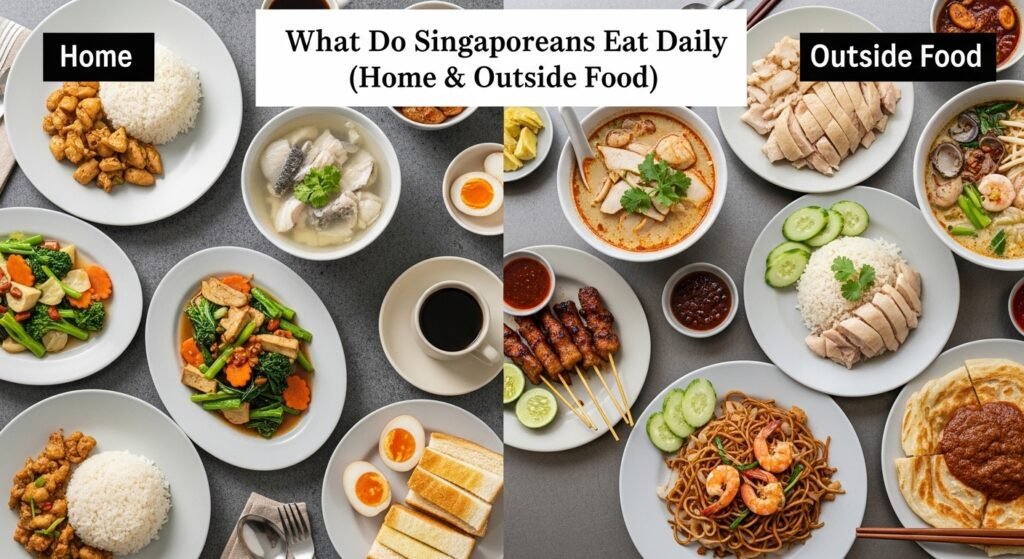
Singapore food is a vibrant, multicultural culinary experience shaped by centuries of Chinese, Malay, Indian, and Peranakan influences all living side by side on one tiny island. From the fragrant coconut-laced broth of laksa to the perfectly poached Hainanese chicken rice, every dish tells a story of migration, tradition, and bold flavour. Four Singaporean dishes Hainanese chicken rice, chilli crab, Katong laksa, and roti prata were included in CNN’s World’s 50 Most Delicious Foods list, cementing Singapore’s status as one of Asia’s premier food destinations. Whether you’re a visitor or a local, eating here is never just a meal it is a full sensory journey through one of the world’s most celebrated food cultures.
At the heart of Singapore food culture are the iconic hawker centres open air food complexes where dozens of stalls serve everything from smoky char kway teow to sweet chendol, all under one roof. These hawker centres serve as community dining rooms where people from all backgrounds share the experience of dining together, with recipes passed down and perfected through generations of dedicated hawkers. In a landmark recognition of its cultural significance, Singapore’s hawker culture was inscribed on the UNESCO Representative List of the Intangible Cultural Heritage of Humanity in 2020 making Singapore food not just delicious, but officially world heritage.
The Foundation of the Singaporean Diet
Before diving into specific meals, it is important to understand the building blocks of Singaporean cuisine. Unlike Western diets that are often structured around a single protein and two sides, Singaporean meals are defined by bold sauces, aromatic broths, fresh herbs, and the rich influence of surrounding Asian cultures especially Chinese, Malay, and Indian.
Rice and noodles form the cornerstone of the Singaporean diet. Unlike in Western countries where they play a supporting role, in Singapore rice and noodles are the main event. They serve as the canvas on which complex flavour profiles are built — from rich coconut-based curries and smoky wok-charred sauces to clear herbal soups and punchy sambal pastes.
Key staple ingredients in everyday Singaporean cooking include:
- Jasmine rice and various noodle types (vermicelli, flat rice noodles, yellow egg noodles)
- Coconut milk — used extensively in Malay and Peranakan dishes
- Soy sauce, oyster sauce, and dark caramel sauce for Chinese-style cooking
- Sambal (a spicy chilli-based condiment) used across all cuisines
- Fresh seafood — prawns, crab, fish, squid — owing to Singapore’s coastal location
- Tofu and bean curd products in Chinese-influenced dishes
- Aromatic spices — turmeric, cumin, coriander, lemongrass — heavily used in Malay and Indian cooking
This combination of ingredients, shaped by centuries of immigration and trade, gives Singaporean food its unmistakable identity: deeply layered, comforting, and always surprising. Jasmine rice and various noodle types, coconut milk, soy-based sauces, sambal, seafood, tofu products, and aromatic spices — which is exactly why Singapore has so many unique cuisine styles living together.
What Singaporeans Eat for Breakfast
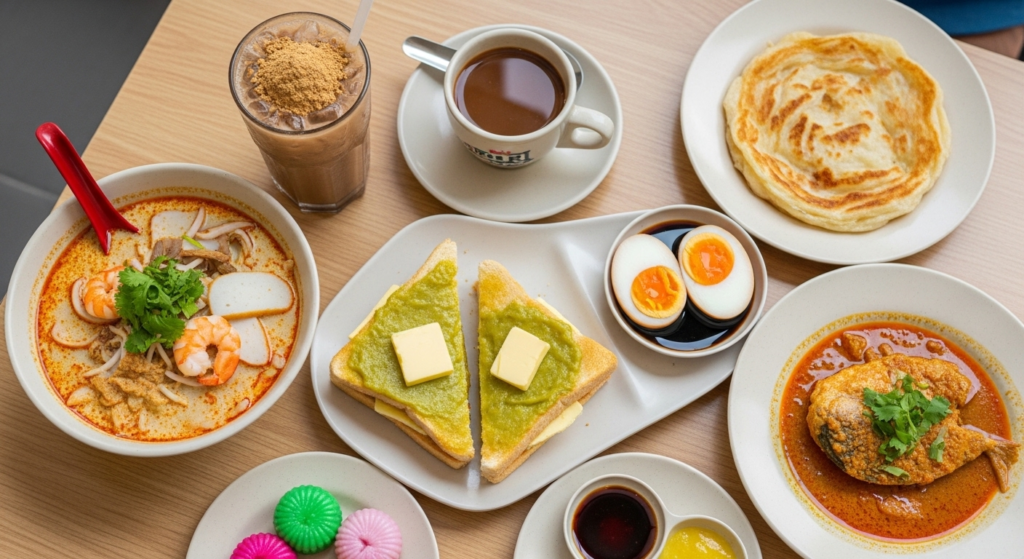
Breakfast in Singapore is far from the quick bowl of cereal or toast familiar to many Western cultures. For Singaporeans, the morning meal is an event worth making time for whether that means a leisurely sit-down at a local kopitiam (traditional coffee shop) or a quick grab from a hawker stall on the way to work.
Interestingly, research shows that only about 62% of Singaporeans eat breakfast daily, making it the least frequently consumed meal of the day. Despite this, those who do eat breakfast take it seriously. The most iconic Singaporean breakfast combination is kaya toast paired with soft-boiled eggs and a cup of kopi the traditional Singaporean coffee brewed with dark roasted beans and often served with condensed milk.
Table 1 below summarises the most popular breakfast options enjoyed by Singaporeans, their cultural origins, typical costs, and where to find them:
Table 1: Popular Daily Breakfast Items in Singapore
| Meal Item | Cuisine Type | Average Cost (SGD) | Where Found |
|---|---|---|---|
| Kaya Toast + Soft Boiled Eggs | Chinese-Singaporean | $2 – $4 | Kopitiams, Hawker Stalls |
| Nasi Lemak | Malay | $2 – $5 | Hawker Centres, Food Courts |
| Roti Prata | Indian | $1 – $3 per piece | Indian Stalls, 24-hr Eateries |
| Congee (Porridge) | Chinese | $3 – $5 | Kopitiams, Hawker Centres |
| Dim Sum | Chinese | $1 – $4 per dish | Chinese Restaurants, Food Courts |
| Chwee Kueh (Rice Cake) | Teochew Chinese | $2 – $3 | Hawker Centres |
The Kopitiam Culture
The kopitiam a term derived from the Malay word for coffee and the Hokkien word for shop is the true heartland of the Singaporean breakfast experience. These traditional coffee shops, found in HDB estates and older neighbourhoods across the island, open early (often by 6 AM) and buzz with activity well before sunrise. Regulars develop a relationship with their preferred stall, often ordering the same breakfast for years.
Roti prata, the flaky fried flatbread of Indian origin, is another breakfast staple — particularly popular on weekends. It is enjoyed plain, with egg, or filled with cheese or banana, and always paired with a rich curry dipping sauce. Indian Muslim stalls are also common breakfast stops, offering murtabak (stuffed pancakes) and tosai (fermented rice and lentil crepes).
Lunch The Hawker Centre Hour
Lunch is arguably the most dynamic meal in Singapore. With busy work schedules, most Singaporeans grab lunch quickly and the hawker centre is the undisputed venue of choice. According to studies, the average Singaporean dines out five to six times a week, and lunch is the meal where this behaviour is most pronounced.
Hawker centres are Singapore’s answer to communal dining. These large, open-air food complexes house dozens sometimes over a hundred individual stalls, each specialising in one or two dishes perfected over decades. They are clean, affordable, and deeply democratic: millionaires and migrant workers alike queue for the same plate of chicken rice.
The Nation’s Favourite: Hainanese Chicken Rice
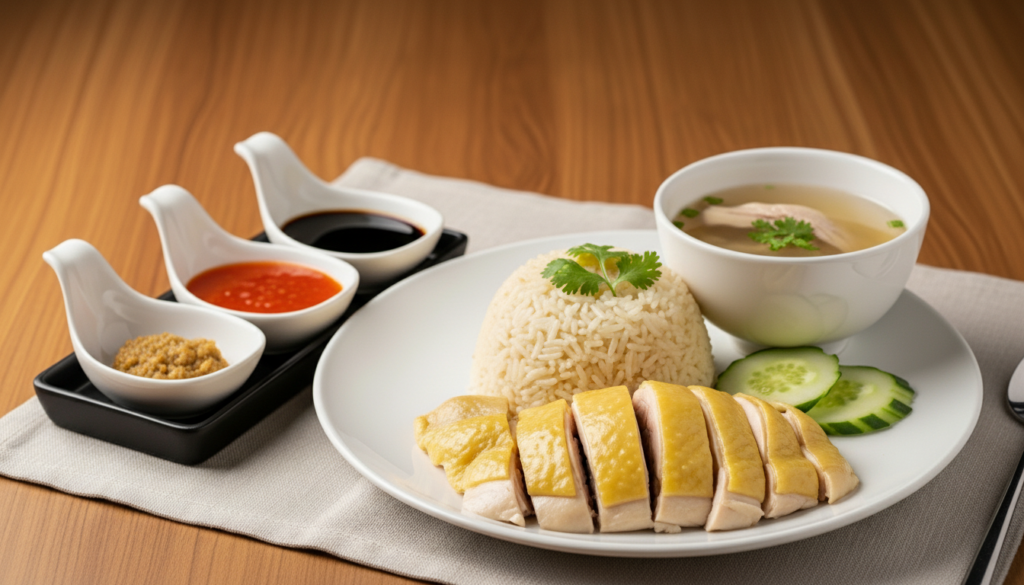
If Singapore has a national dish, it is Hainanese chicken rice. Deceptively simple in appearance — poached or roasted chicken served over fragrant garlic-infused rice, accompanied by chilli sauce, ginger paste, and dark soy — this dish represents the quiet mastery of Singaporean cooking. The rice is cooked in chicken broth, giving it a richness that elevates the entire plate. Hawker stalls like Tian Tian at Maxwell Food Centre are legendary, drawing hour-long queues on a good day.
Laksa The Peranakan Classic
Laksa is one of Singapore’s most beloved lunch dishes and a proud emblem of Peranakan (Straits Chinese) culture. It features thick rice noodles submerged in a rich, spicy coconut curry broth, topped with prawns, tofu puffs, cockles, and a dollop of sambal. Katong laksa — a variant where the noodles are cut short so the dish can be eaten entirely with a spoon — has become internationally recognised and was ranked among CNN’s 50 World’s Most Delicious Foods.
Char Kway Teow The Wok Hei Dish
Char kway teow is a stir-fried noodle dish that captures the essence of wok hei the smoky, slightly charred flavour that only a blazing hot wok can produce. Flat rice noodles are tossed with dark soy sauce, Chinese sausage, prawns, egg, and bean sprouts in a fire of intense heat. It is indulgent, smoky, and utterly addictive, making it a lunch favourite across all age groups.
Other Common Lunchtime Dishes
- Bak Chor Mee — Minced pork noodles served dry with vinegar and chilli, a Teochew classic
- Yong Tau Foo — A customisable dish where diners pick from tofu, vegetables, and fish balls stuffed with fish paste, then choose a soup or dry preparation
- Nasi Padang — Steamed rice served with an array of Malay-style curried dishes, chosen by the diner
- Economic Rice (Cai Png) — A budget-friendly concept where diners pick rice with their choice of side dishes from a buffet-style counter, often costing as little as $3–5 SGD
- Wonton Mee — Egg noodles served with wontons (dumplings), char siu (BBQ pork), and a clear broth or dry seasoning
Dinner Family Tables & Zi Char Feasts
Dinner is the most universally consumed meal among Singaporeans surveys show that 86% of Singaporeans eat dinner daily, making it the one meal that most households prioritise. It is the meal most likely to be shared with family, and the one where Singaporeans are most willing to spend a little extra for quality and variety.
Dinner culture in Singapore spans an enormous range from a simple bowl of bak kut teh (pork rib soup) at a hawker stall to a full zi char spread ordered for a table of eight. Zi char (meaning ‘cook and fry’ in Hokkien) refers to the informal Chinese restaurant-style of eating where a group shares multiple dishes ordered from a menu, rather than each person ordering individually. If you want to connect dinner culture to hawker-style eating and variety, you can also Singapore restaurants for local food
The Iconic Zi Char Dishes
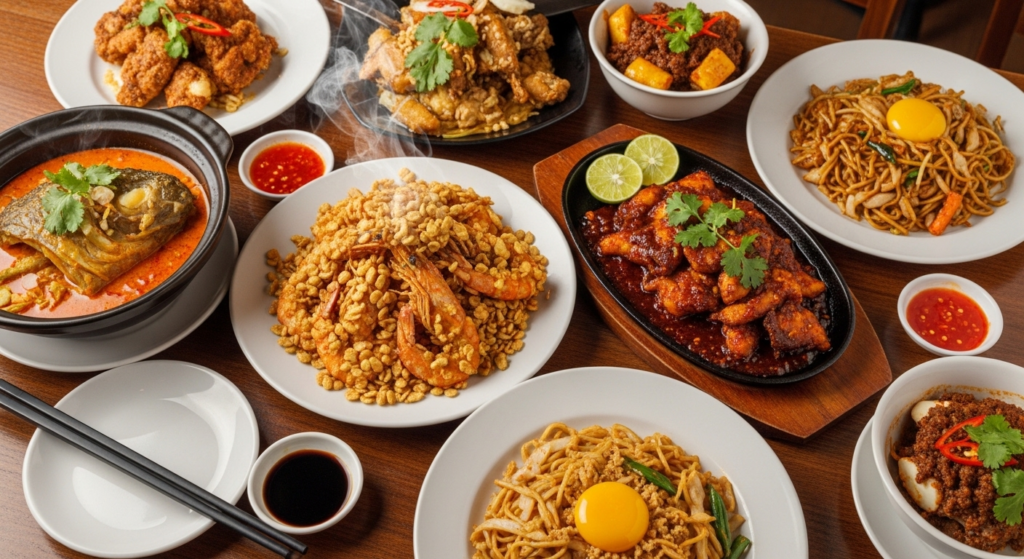
- Chilli Crab — Singapore’s most internationally famous dish. Hard-shell crabs are stir-fried in a rich, tangy tomato-chilli gravy and served with deep-fried mantou buns for dipping. It is messy, flavourful, and an unmissable experience.
- Black Pepper Crab — A drier, spicier alternative to chilli crab, the crabs are wok-fried with cracked black pepper and butter, creating an intensely aromatic dish.
- Salted Egg Yolk Dishes — From prawns and fish to chicken and even potato chips, salted egg yolk has swept through Singapore’s food scene as a golden, creamy, umami-rich coating.
- Steamed Fish — Whole fish steamed with ginger, spring onion, soy sauce, and hot oil a staple of Chinese family dinners.
- Stir-Fried Vegetables — Kangkong (water spinach) with sambal or garlic, long beans with minced pork fresh greens are always part of a proper zi char meal.
Bak Kut Teh The Night Owl’s Soup
Bak kut teh literally ‘meat bone tea’ is a pork rib soup simmered for hours in a fragrant broth of garlic, pepper, herbs, and soy sauce. It is particularly associated with dinner and late-night supper, and is often eaten with rice and you tiao (fried dough sticks) for dipping. Singapore’s Teochew-style version tends to be clearer and peppery, distinguishing it from the darker, herbal Malaysian version.
Home Cooking in Singapore
Singapore is unusual among modern cities in how little its residents cook at home. Surveys consistently show that only around 22% of Singaporeans cook at home daily a remarkably low figure compared to cities like London or Shanghai where home cooking is the norm. The reasons are practical: hawker food is extraordinarily cheap, diverse, and available around the clock, making the effort and cost of grocery shopping and cooking at home difficult to justify for many.
That said, home cooking has not disappeared. For families particularly older generations and those with young children weekend cooking remains a meaningful tradition. The home kitchen tends to produce simpler, more nurturing food: claypot rice, simple stir-fries, soups, and steamed dishes.
What Home Cooks Make
- Fried rice (nasi goreng or Chinese fried rice) — the go-to leftover meal, quick and adaptable
- Soup — herbal chicken or pork soup, often slow-cooked for hours for nutritional benefit
- Stir-fried dishes — eggs with tomatoes, tofu with minced pork, green vegetables in oyster sauce
- Curry — chicken, mutton, or fish curry, often cooked in large batches and eaten over multiple days
- Congee — a rice porridge comfort food especially popular when someone is unwell
It is also worth noting that home cooking in Singaporean Indian households tends to be more frequent, given that dietary requirements (such as vegetarianism and halal practices) sometimes make eating out a more complex decision. Many Indian families cook elaborate lentil dishes, rotis, and sabzis at home on a daily basis.
6. Home Cooking vs. Eating Out
The tension between home cooking and eating out is one of the defining characteristics of Singaporean food culture. The table below provides a clear side-by-side comparison of what each option offers the average Singaporean:
Table 2: Home Cooking vs. Eating Out in Singapore
| Factor | Home Cooking | Eating Out (Hawker/Food Court) |
|---|---|---|
| Cost per Meal | $5 – $15 (ingredients for family) | $2 – $8 per person |
| Time Required | 30 – 90 minutes prep + cooking | 5 – 20 minutes |
| Frequency (Among Singaporeans) | ~22% cook daily | ~78% eat out or order in daily |
| Healthiness | Controllable; typically healthier | Varies; often higher in sodium & oil |
| Variety | Limited by home pantry | Hundreds of dishes available |
| Popular Choices | Fried rice, soup, stir-fried veg | Chicken rice, laksa, char kway teow |
| Social Experience | Family/intimate setting | Community hawker centre vibe |
| Convenience | Requires planning & groceries | Extremely convenient, widely available |
The data is clear: eating out wins overwhelmingly on convenience, variety, and even cost for singles. Home cooking reclaims the advantage when it comes to health control, portion management, and family bonding. As Singapore’s population ages and health consciousness grows, there is a gentle but noticeable shift back toward home cooking particularly among millennials who treat cooking as a lifestyle pursuit rather than a chore.
7. Snacks, Desserts & Drinks in Daily Life
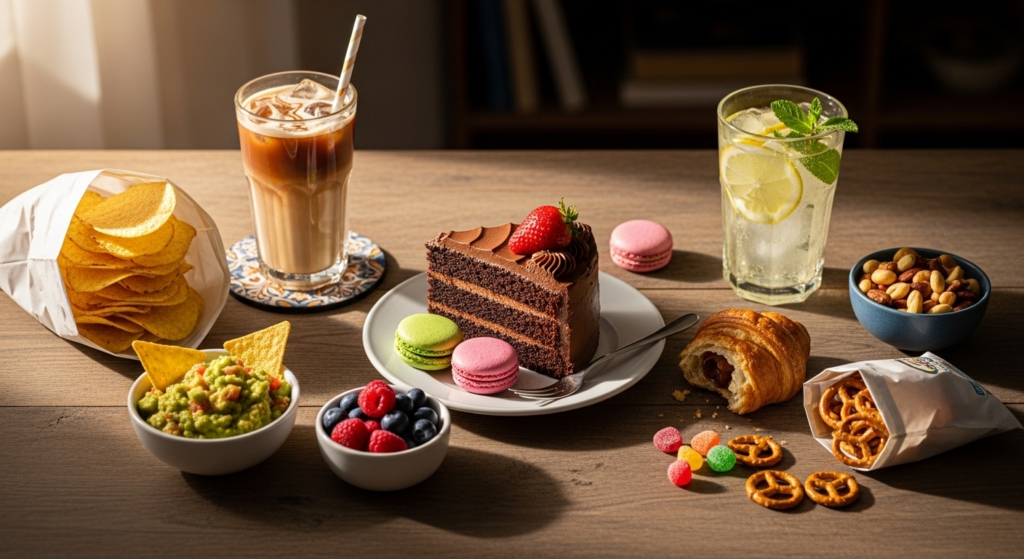
Singaporeans are enthusiastic snackers. Street snacks and desserts are deeply embedded in daily life and reflect the same multicultural diversity as the main meals.
Popular Snacks
- Satay — Skewers of marinated chicken, beef, or mutton grilled over charcoal and served with peanut sauce, sliced onions, and ketupat (compressed rice cakes). A quintessential night market snack.
- Otah-Otah — A spiced fish paste wrapped in banana leaf and grilled, popular as both a snack and a side dish.
- Popiah — Fresh spring rolls filled with turnip, carrots, prawns, egg, and bean sprouts, drizzled with sweet sauce and chilli.
- Muah Chee — Glutinous rice balls coated in crushed peanuts and sugar — a traditional Teochew street snack.
Beloved Desserts
- Chendol — A dessert of shaved ice topped with green pandan jelly noodles, red kidney beans, and coconut milk drizzled with gula melaka (palm sugar). A Singaporean summer essential.
- Ice Kachang — A colourful mountain of shaved ice drenched in brightly coloured syrups, evaporated milk, and hidden treasures of attap seeds, red bean, and grass jelly underneath.
- Orh Nee — A smooth, lightly sweet taro paste dessert topped with ginkgo nuts and coconut cream, of Teochew origin.
- Bubur Cha Cha — A sweet coconut milk soup with chunks of sweet potato, yam, and tapioca jelly balls.
What Singaporeans Drink Daily
The drink of Singapore is kopi thick, intensely flavoured local coffee brewed from dark-roasted beans (often roasted with sugar and butter) and served with sweetened condensed milk. The kopitiam vocabulary for ordering coffee is a language in itself: kopi (with milk), kopi-o (black), kopi-o kosong (black, no sugar), kopi gao (extra strong), and so on.
Tea (teh) is equally popular, ordered by the same system as coffee. Bandung — a bright pink drink of rose syrup and evaporated milk — is a beloved Malay cultural beverage. Fresh sugar cane juice, lime juice (calamansi), and coconut water are also extremely common, reflecting Singapore’s tropical climate and need for cooling refreshments.
In recent years, bubble tea from Taiwan has become enormously popular, particularly among younger Singaporeans, spawning long queues outside dedicated bubble tea shops throughout the island.
8. Iconic Singaporean Dishes A Daily Meal Guide
Singapore’s most beloved dishes span every meal of the day. The table below offers a comprehensive overview of iconic Singaporean dishes by meal time, their cultural origin, and key ingredients:
Table 3: Iconic Singaporean Dishes by Meal Time
| Meal Time | Popular Dish | Cultural Origin | Key Ingredients |
|---|---|---|---|
| Breakfast | Kaya Toast & Kopi | Hainanese | Toast, coconut jam, soft eggs, local coffee |
| Breakfast | Roti Prata | South Indian | Flour dough, ghee, curry dipping sauce |
| Lunch | Hainanese Chicken Rice | Chinese (Hainanese) | Poached chicken, garlic rice, chili sauce |
| Lunch | Laksa | Peranakan | Rice noodles, coconut curry broth, prawns, tofu |
| Lunch | Char Kway Teow | Teochew Chinese | Flat rice noodles, dark soy, egg, bean sprouts |
| Dinner | Chilli Crab | Singaporean | Hard-shell crab, tomato-chilli gravy, mantou buns |
| Dinner | Bak Kut Teh | Hokkien Chinese | Pork ribs, herbal broth, garlic, pepper |
| Dinner | Fish Head Curry | Indian-Chinese fusion | Fish head, tamarind curry, vegetables |
| Snack/Supper | Satay | Malay | Grilled skewered meat, peanut sauce, ketupat |
| Snack/Supper | Oyster Omelette | Teochew Chinese | Fresh oysters, eggs, potato starch, sambal |
9. Evolving Food Habits Modern Singapore
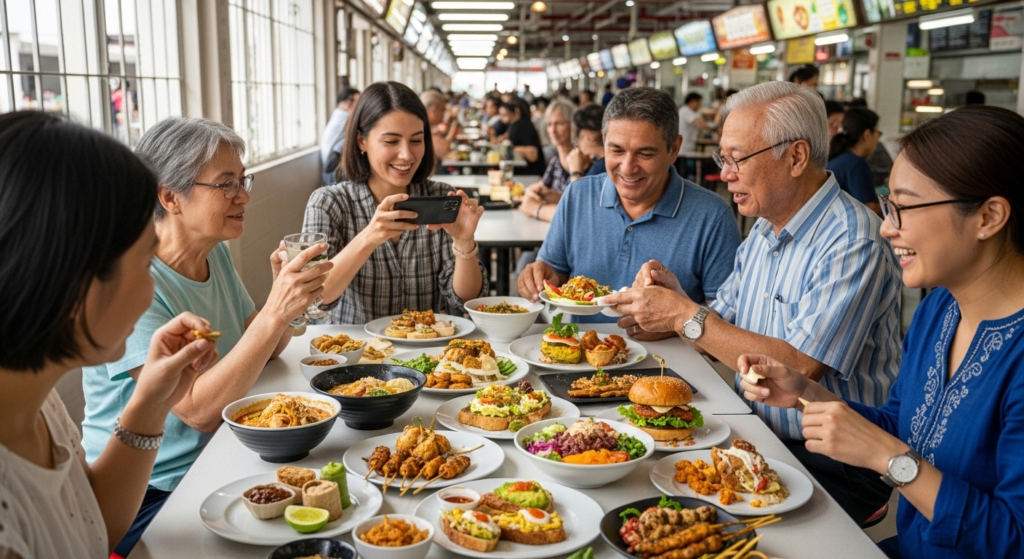
Singapore’s food culture is not static. While hawker centres and traditional dishes remain at its core, modern Singaporeans particularly younger generations are reshaping their daily diets in response to global trends, health awareness, and technology. If you mention “hidden food places” or exploring beyond tourist spots, hidden food spots in Singapore
Health Conscious Eating
There is a growing movement toward healthier eating in Singapore, driven partly by government campaigns like the Health Promotion Board’s ‘Healthier Choice’ symbol, which marks lower-fat, lower-sodium options in hawker centres. Many hawkers now offer brown rice options alongside white rice, and reduced sugar versions of traditional desserts.
Plant Based and Vegetarian Diets
While the majority of Singaporeans (51%) identify as meat eaters, approximately 18% describe themselves as flexitarians eating primarily plant-based food with occasional meat. Fully vegetarian and vegan options are increasingly available across the island, not just in dedicated restaurants but also in hawker centres, where Buddhist vegetarian stalls have long been a fixture.
Food Delivery Culture
Platforms like GrabFood, Foodpanda, and Deliveroo have transformed how Singaporeans eat. With a few taps on a smartphone, any cuisine from any corner of the island can arrive at one’s door within 30 minutes. This has further reduced the frequency of home cooking and allowed Singaporeans to access restaurant-quality food without leaving home a trend accelerated dramatically during the COVID-19 pandemic.
Fusion and Global Influences
Singapore’s cosmopolitan character means its food scene is constantly absorbing and reinterpreting global influences. Japanese cuisine ranks second in popularity after Chinese among all diet types, and Korean food has seen a massive surge in popularity driven by cultural exports. Cafes serving avocado toast, artisanal coffee, and brunch menus have become fixtures in trendy neighbourhoods like Tiong Bahru, Dempsey Hill, and Kampong Glam.
Conclusion
What Singaporeans eat daily is a story that cannot be told with a single dish or a single meal. It is a story written across hawker stalls that open before dawn, kopitiams buzzing with morning regulars, food courts packed with office workers at noon, and zi char tables loaded with sharing plates under the evening sky. It is told through the steam rising from a bowl of laksa, the sizzle of a wok over a high flame, and the quiet satisfaction of a family sharing a pot of bak kut teh.
Singapore’s daily diet is a living, evolving reflection of its people diverse, pragmatic, deeply sociable, and endlessly hungry for the next great meal. Whether eating at home or dining out, what unites every Singaporean at the table is the belief, shared across all cultures and generations, that great food is one of life’s most essential pleasures.
In a city-state where the question ‘Have you eaten?’ functions as both greeting and expression of care, food is never just food. It is community, heritage, identity, and love served hot, and usually at a price that won’t break the bank.