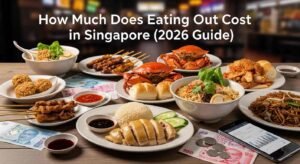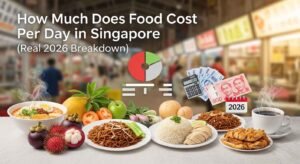


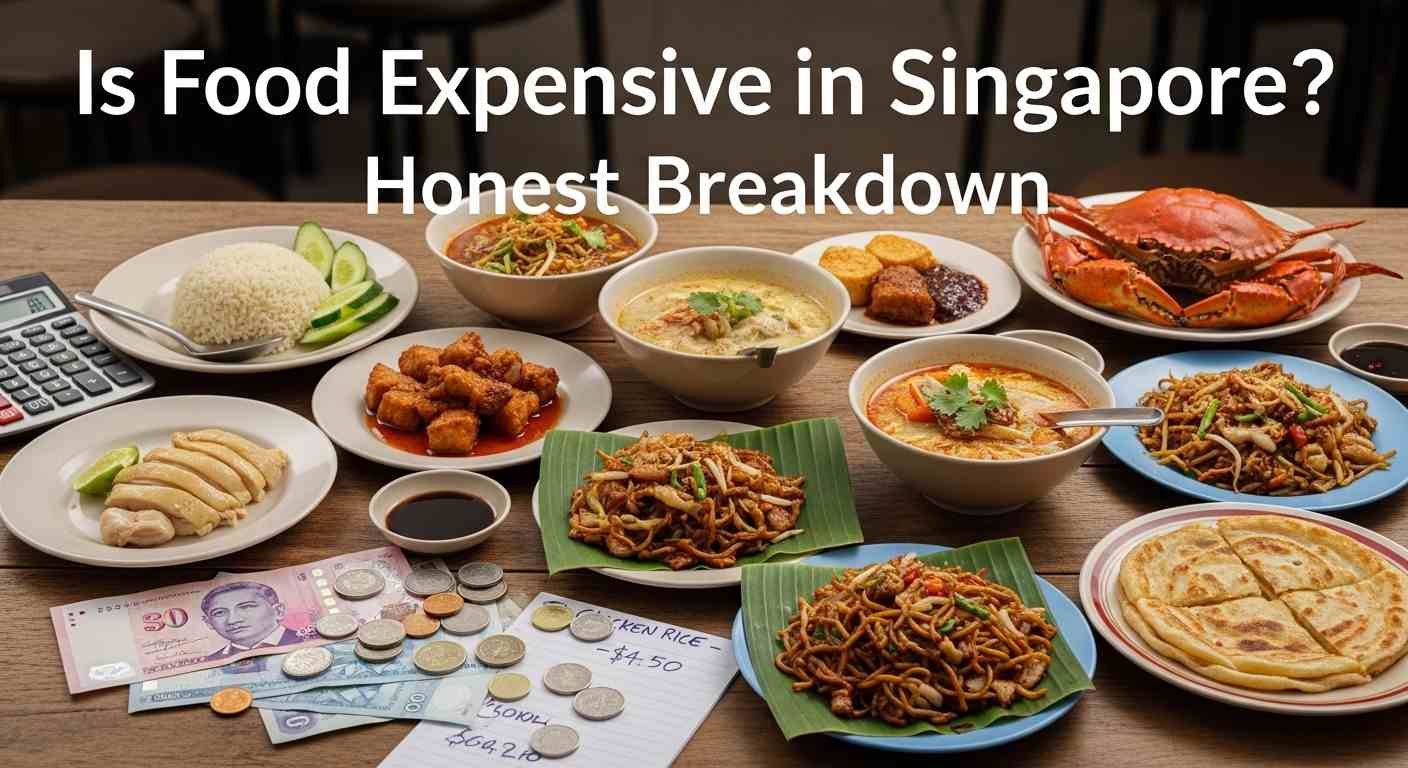
Is food expensive in Singapore Not if you eat like a local. Singapore’s iconic hawker centres serve full, flavourful meals think chicken rice, laksa, and nasi lemak for just SGD $3 to $6 (roughly $2–$4 USD). These government-subsidised food hubs are found across the entire island and are the reason Singapore consistently ranks as one of the best-value food destinations in Asia, despite being one of the world’s most expensive cities overall.
That said, food expensive Singapore becomes a reality the moment you step into sit-down restaurants, specialty cafés, or fine dining establishments. Mid-range restaurants charge $15–$70 per person, alcohol is heavily taxed, and a 9% GST plus 10% service charge can silently add 19% to your restaurant bill. The honest verdict: eat at hawker centres and you’ll spend surprisingly little shift to Western dining and imported groceries, and costs rise fast.
The Hawker Centre Culture: Where Budget Meets Flavour
Arguably the greatest thing about eating in Singapore is the hawker centre. These open-air food complexes are spread all across the island from Newton Food Centre to Maxwell Food Centre to the sprawling Chinatown Complex. They are the backbone of Singaporean food culture, and they remain one of the most affordable ways to eat well anywhere in the world. A full, satisfying meal at a hawker centre typically costs between SGD $3 and $6. If you’re visiting for the first time, don’t miss these hawker stalls in Singapore for authentic local flavours.
In 2020, UNESCO added Singapore’s hawker culture to its Representative List of Intangible Cultural Heritage of Humanity a recognition that these places are not just cheap eats, but a living institution. A full, satisfying meal at a hawker centre typically costs between SGD $3 and $6. For context, that’s roughly $2.20 to $4.40 USD. Here’s what makes hawker centres exceptional:
- They are government-subsidised, keeping stall rental costs low so food prices stay accessible for locals.
- You’ll find an enormous variety: Chinese, Malay, Indian, and fusion dishes all under one roof.
- Quality is often remarkably high — several hawker stalls across Singapore have earned Michelin stars or Bib Gourmand recognition.
- They’re open early morning to late night, making them convenient at any hour.
- Most are cash-friendly, though digital payment (PayNow, NETS) is now widely accepted.
Popular hawker dishes and their typical price range are listed in the table below. These prices are based on stalls across various hawker centres as of 2024–2025.
| Meal Type | Venue | Price (SGD) | Price (USD approx.) |
|---|---|---|---|
| Chicken Rice | Hawker Centre | $3.00 – $5.00 | ~$2.20 – $3.70 |
| Nasi Lemak | Hawker Centre | $3.00 – $4.50 | ~$2.20 – $3.30 |
| Char Kway Teow | Hawker Centre | $4.00 – $6.00 | ~$3.00 – $4.40 |
| Laksa | Hawker Centre / Food Court | $4.00 – $7.00 | ~$3.00 – $5.20 |
| Roti Prata (2 pcs) | Hawker / Mamak Stall | $2.00 – $3.50 | ~$1.50 – $2.60 |
| Economy Rice (3 dishes) | Hawker Centre | $4.00 – $6.00 | ~$3.00 – $4.40 |
| Burger Meal (Fast Food) | McDonald’s / KFC | $7.00 – $10.00 | ~$5.20 – $7.40 |
Mid Range Restaurants, Cafes, and Casual Dining
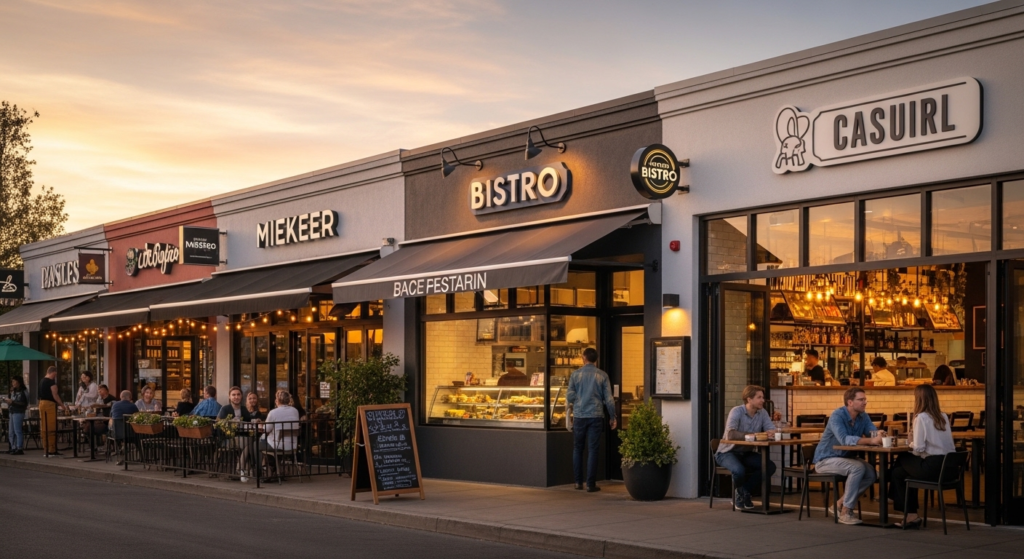
Step outside the hawker world and prices begin to climb but Singapore’s mid-range dining scene offers solid value and incredible variety. The city is home to thousands of casual restaurants, zi char eateries (Chinese home-style cooking), Japanese chains, Korean BBQ spots, Indian restaurants, and Western cafés.
At a casual sit-down restaurant, expect to pay between $15 and $30 per person, including a drink. This tier covers a wide range of cuisines and is where most working professionals and tourists eat regularly. Mall food courts (like those run by Kopitiam, Foodfare, or Koufu) sit between hawker centres and restaurants — they’re slightly more expensive than hawker food but offer air-conditioning and a wider variety of cuisines, with meals typically priced between $5 and $10.
Key things to note about mid-range dining in Singapore:
- Singapore has a mandatory GST (Goods and Services Tax) currently at 9%, applied to most restaurant bills.
- Many sit-down restaurants add a 10% service charge on top of GST — this can add 19% to your bill unexpectedly.
- Food delivery apps like GrabFood and foodpanda are hugely popular, with delivery fees of $2–$5 adding to costs.
- Alcohol is heavily taxed in Singapore, making drinking out significantly more expensive than in neighbouring countries.
- Lunch set meals at restaurants offer the best value often 20–30% cheaper than the same dishes ordered at dinner.
| Category | Typical Venue | Cost Per Person (SGD) | Cost Per Person (USD) |
|---|---|---|---|
| Casual Restaurant | Local café, zi char restaurant | $15 – $30 | $11 – $22 |
| Mid-Range Dining | Mall restaurant, Japanese chain | $30 – $70 | $22 – $52 |
| Fine Dining | Michelin-starred, hotel restaurant | $100 – $400+ | $74 – $295+ |
| Drinks (kopi/teh) | Kopitiam / Hawker Centre | $1.00 – $2.00 | $0.75 – $1.50 |
| Specialty Coffee | Starbucks / Third-wave café | $6.00 – $10.00 | $4.40 – $7.40 |
| Craft Beer / Wine (1 glass) | Bar / Restaurant | $12 – $22 | $8.90 – $16.30 |
Grocery Shopping and Cooking at Home

For residents and long-stay visitors, cooking at home is one of the most effective ways to manage food costs in Singapore. Grocery shopping is very much a tale of two supermarkets: local vs. premium.
Local supermarket chains like NTUC FairPrice, Sheng Siong, and Giant offer competitive prices on staples. You can buy a week’s worth of groceries for one person for roughly $60–$100 SGD. However, imported goods and Western-specific items at premium retailers like Cold Storage or Little Farms can cost two to three times more.
Here are some benchmarks for common grocery items at local supermarkets:
- Rice (5kg bag): $8 – $15 SGD
- Chicken breast (500g): $4 – $7 SGD
- Local vegetables (per bundle): $1.50 – $3.50 SGD
- Eggs (10 pcs): $2.50 – $4.50 SGD
- Bread (loaf): $2.50 – $4 SGD
- Fresh fish (whole, per kg): $6 – $15 SGD depending on type
- Imported cheese (200g): $8 – $18 SGD
- Milk (1 litre): $3 – $5 SGD
Wet markets (found in most HDB estates) often offer fresher produce at lower prices than supermarkets, and bargaining is sometimes possible. For those cooking regularly at home, Singapore is very manageable on a food budget.
Fine Dining and Singapore’s World Class Restaurant Scene
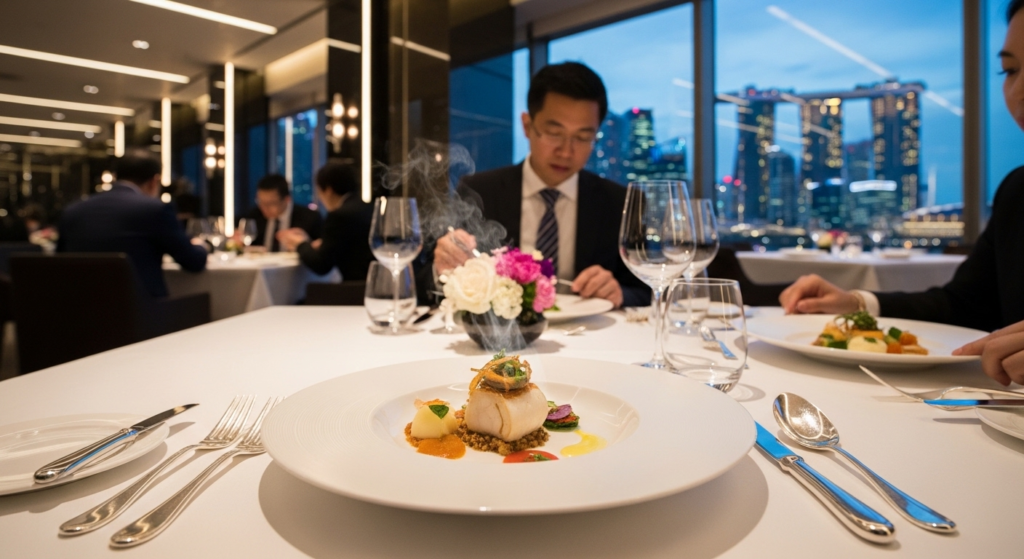
On the other end of the spectrum, Singapore punches far above its weight in the fine dining world. The city has over 50 Michelin-starred restaurants, making it one of the most decorated dining destinations in Asia. From Odette and Les Amis to Burnt Ends and Candlenut, Singapore’s top restaurants offer world-class experiences at world-class prices.
A tasting menu at a top-tier Singapore restaurant typically runs from $150 to $400 per person, excluding wine pairings. Wine and cocktails at these establishments can add $60–$150 per person on top of that. While this is obviously premium territory, it is worth noting that Singapore’s fine dining scene is often considered more affordable than equivalent restaurants in London, New York, or Tokyo.
What makes fine dining in Singapore notable:
- Michelin-starred hawker stalls (like Liao Fan Hong Kong Soy Sauce Chicken Rice) still serve meals for under $5 — a uniquely Singaporean phenomenon.
- Many top restaurants offer affordable lunch sets or bar menus that give a taste of the full experience at a fraction of the cost.
- Singapore’s cultural diversity means fine dining spans Chinese, Indian, Malay, European, Japanese, and fusion cuisines at the highest levels.
- Rooftop bars and hotel restaurants often charge a premium purely for the view and ambience, separate from food quality.
Monthly Food Budget: What Should You Realistically Expect?
Whether you’re a tourist, a newly arrived expat, or a local navigating everyday expenses, your monthly food budget in Singapore will vary dramatically based on your lifestyle and preferences. The table below provides an honest breakdown across different spending profiles. If you’re visiting short-term, our budget-friendly Singapore food gives practical recommendations.
| Budget Type | Eating Style | Monthly Cost (SGD) | Monthly Cost (USD) |
|---|---|---|---|
| Very Tight | Hawker-only, simple meals | $300 – $450 | $220 – $335 |
| Budget-Conscious | Mix of hawker + occasional café | $450 – $700 | $335 – $520 |
| Average Local | Hawker + restaurants + delivery | $700 – $1,000 | $520 – $740 |
| Comfortable | Restaurants + international food | $1,000 – $1,800 | $740 – $1,335 |
| Expat / High-End | Fine dining + imported groceries | $2,000+ | $1,480+ |
Tips to Eat Well Without Breaking the Bank in Singapore
Singapore can absolutely be navigated on a tight food budget without sacrificing quality or variety. Here are practical tips to maximise your money:
- Always eat at hawker centres and food courts for your main meals — you can have a nutritious, flavourful meal for $4–$6 every single day.
- Explore neighbourhood hawker centres rather than tourist hotspots like Newton Food Centre, where prices can be 30–50% higher.
- Take advantage of lunch specials and set menus at restaurants — many offer significantly discounted prices between 11:30 AM and 2:30 PM.
- Shop at NTUC FairPrice or Sheng Siong for groceries rather than premium supermarkets.
- Drink kopi (traditional Singaporean coffee) instead of specialty café coffee — at $1.20–$1.80 vs. $6–$8, the savings add up fast.
- Use GrabFood or foodpanda promo codes and vouchers — they frequently offer discounts that make delivery more cost-effective.
- Avoid restaurants that show menu prices without GST and service charge — always check the fine print at the bottom of the menu.
- Visit wet markets for fresh produce they’re cheaper than supermarkets and often have better quality items.
Final Verdict: Is Food Expensive in Singapore
The answer is both yes and no and that nuance is important. If you eat like a local, leaning on Singapore’s incredible hawker centre culture, you can eat extraordinarily well for a relatively small amount of money. A fully satisfying and even gourmet-quality meal for under $6 is completely realistic and easily achievable every single day.
However, if you gravitate towards Western-style restaurants, fine dining, imported foods, alcohol, or food delivery regularly, costs can escalate quickly. Singapore is genuinely one of the most expensive cities in the world for Western-style eating and imported goods, and alcohol prices are among the highest in Asia due to heavy taxation.
The key takeaway is this: Singapore’s food culture is uniquely designed to be accessible. The hawker system exists precisely to ensure that even those on the lowest incomes can eat well. That infrastructure is your greatest asset as a visitor or resident. Lean into it, explore it, and you’ll find that Singapore’s food is not just affordable it’s one of the greatest culinary bargains anywhere on the planet.