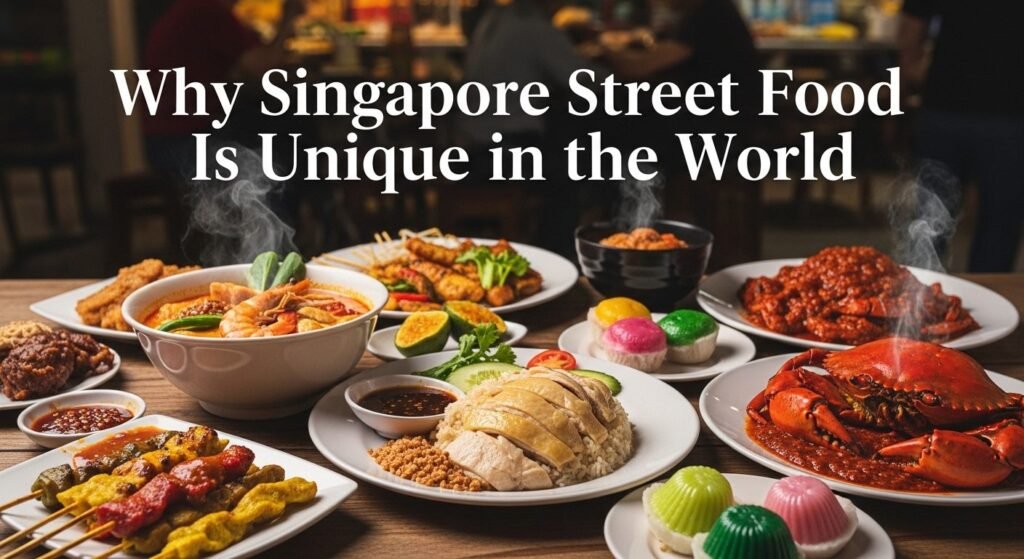
Singapore street food is unique because it brings together centuries of Chinese, Malay, Indian, and Peranakan culinary traditions into one of the worlds most concentrated, affordable, and regulated food cultures. Unlike street food scenes in other countries, Singapore’s hawker centres government-managed open-air food courts ensure hygiene, consistency, and accessibility, allowing world-class dishes to be served for just a few dollars. From the smoky wok hei of Char Kway Teow to the rich, slow-cooked broth of Bak Kut Teh, every plate reflects a living cultural archive that has earned UNESCO Intangible Cultural Heritage status in 2020.
What truly sets Singapore street food unique apart from any other food destination on Earth is the extraordinary density of excellence in a single location. In just 728 square kilometers, this island nation hosts over 100 hawker centres with more than 6,000 stalls, including a McDonald’s outlet whose chicken rice stall holds a Michelin Bib Gourmand making Singapore arguably the only place in the world where “cheap street food” and “Michelin recognition” exist in the same sentence. Whether you’re a first-time visitor or a lifelong local, eating your way through Singapore is a cultural, historical, and sensory journey unlike anything else on the planet.
A Nation That Eats Together
Food in Singapore isn’t just sustenance it’s identity. Ask any Singaporean what they miss most when abroad, and the answer is almost always the food. The hawker stall. The specific char siu bao from that uncle’s stall in Tiong Bahru. The rojak vendor who has been frying for 40 years. This obsession with food is baked into the national DNA, and it makes Singapore one of the most extraordinary culinary destinations in the world. This obsession with food is deeply tied to the island’s multicultural identity. If you want to explore the wider cultural impact of food in Singapore, you can read our guide on Singapore’s multicultural food influences.
But what exactly makes Singapore street food unique. The answer lies at the intersection of history, multiculturalism, government policy, and sheer culinary passion. No other city on Earth has managed to blend so many cooking traditions into such a democratic, affordable, and high-quality food ecosystem.
The Historical Roots: How It All Began
Singapore’s street food culture was born in the 19th century, when waves of immigrants arrived from China, India, and the Malay Archipelago under British colonial rule. These communities brought their own cooking traditions, ingredients, and recipes but they also began adapting to local ingredients and cross-pollinating with each other’s cuisines.
Chinese Hokkien and Teochew immigrants gave Singapore dishes like Hokkien Mee and Teochew Porridge. Tamil Indian immigrants brought Roti Prata and Biryani. Malay communities contributed Nasi Lemak and Satay. The Peranakans descendants of Chinese immigrants who married local Malays invented an entirely new cuisine: Nyonya cooking, which fuses Chinese techniques with Malay spices to produce dishes like Laksa and Ayam Buah Keluak.
This multi-ethnic layering over 200 years is the single biggest reason Singapore street food is unlike anywhere else. It is, at its core, a food culture built from fusion not as a trend, but as a survival strategy. To better understand how these traditions blended together to create a unique cuisine, see our detailed guide on unique Singapore cuisine .
The Hawker Centre System: Singapores Greatest Food Innovation
One of the most unique aspects of Singapore’s food scene is the hawker centre a government-built, open-air food complex that houses dozens to hundreds of individual food stalls under one roof. This model was established in the 1970s when the Singapore government relocated street vendors off the roads and into dedicated, hygienic, and regulated complexes.
Singapore Hawker Centres vs Street Food in Other Countries
| Feature | Singapore Hawker Centres | Bangkok Street Food | Mexico City Street Food |
|---|---|---|---|
| Government Regulation | Strictly regulated | Minimal regulation | Minimal regulation |
| Hygiene Grading System | A/B/C grading by NEA | No formal system | No formal system |
| UNESCO Recognition | 2020 Heritage Status | Not listed | Not listed |
| Average Meal Cost (USD) | $2–$5 | $1–$3 | $1–$4 |
| Michelin Recognition | Multiple stalls recognized | Some recognition | Rare |
| Indoor/Sheltered | Always covered | Mostly open roads | Mostly open roads |
| Stall Licensing Required | Mandatory | Not always | Not always |
This system means that a bowl of Hainanese Chicken Rice from a hawker stall in Maxwell Food Centre meets cleanliness standards that would surprise most foreign visitors. Singapore is unique in the world for turning street food into a formal, sustainable, and nationally celebrated institution.
The Dishes: A World on One Plate
No article about Singapore street food would be complete without diving into the dishes themselves. Here are some of the most iconic:
Hainanese Chicken Rice
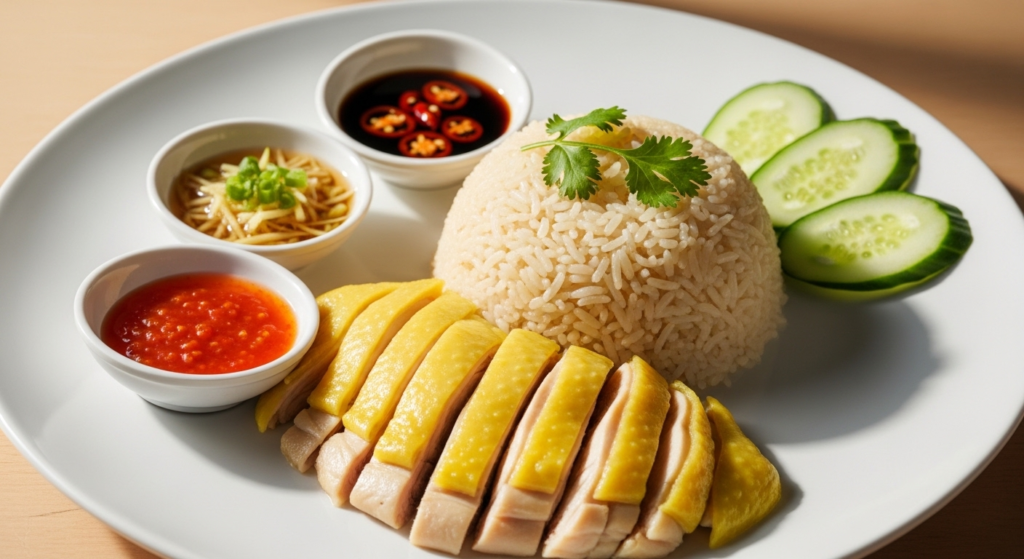
Often called Singapore’s unofficial national dish, this deceptively simple plate poached or roasted chicken served over fragrant rice cooked in chicken broth reflects the Hainanese immigrant community’s influence. The magic is in the details: the ginger-scallion sauce, the chilli dip, and the clear soup on the side. If you’re planning to explore Singapore’s food scene as a visitor, you may also enjoy our guide to must try Singapore dishes for tourists.
Chilli Crab
Invented in Singapore in the 1950s, chilli crab is a dish you will not find authentically replicated anywhere else. Mud crab is stir-fried in a rich, semi-thick sauce made with tomato, chilli, egg, and a hint of sweetness. It’s messy, it’s bold, and it’s uniquely Singaporean.
Satay
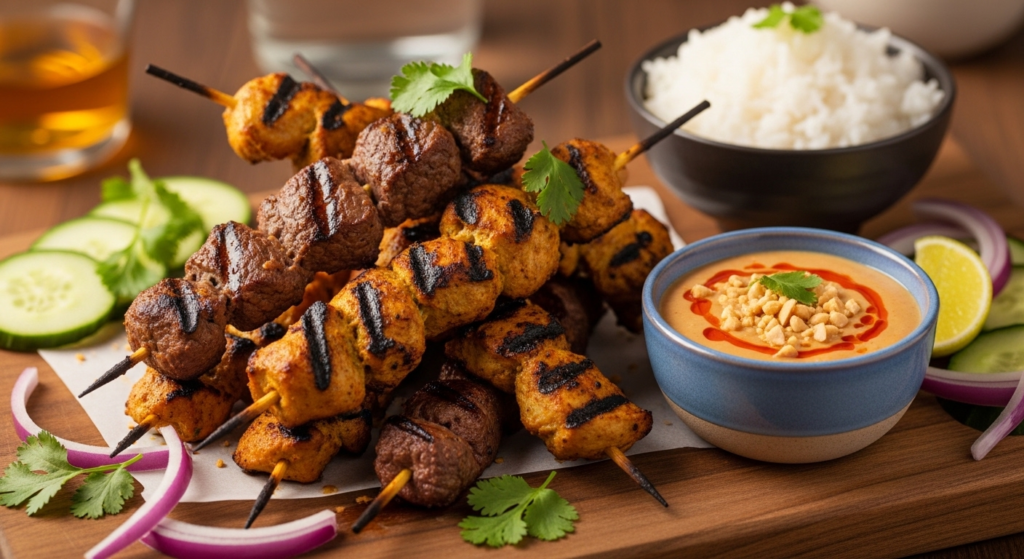
While satay exists across Southeast Asia, Singapore’s version marinated meat skewers grilled over charcoal and served with a peanut dipping sauce, cucumber, and ketupat (rice cakes) has its own distinct character, particularly at the famous Lau Pa Sat festival market.
Laksa
A Peranakan dish that perfectly illustrates Singapore’s cultural fusion, Laksa features thick rice noodles in a rich, spicy coconut milk broth, topped with prawns, cockles, fish cake, and tofu puffs. Every hawker stall has its own recipe, and food debates over the “best laksa” are a national pastime.
Roti Prata
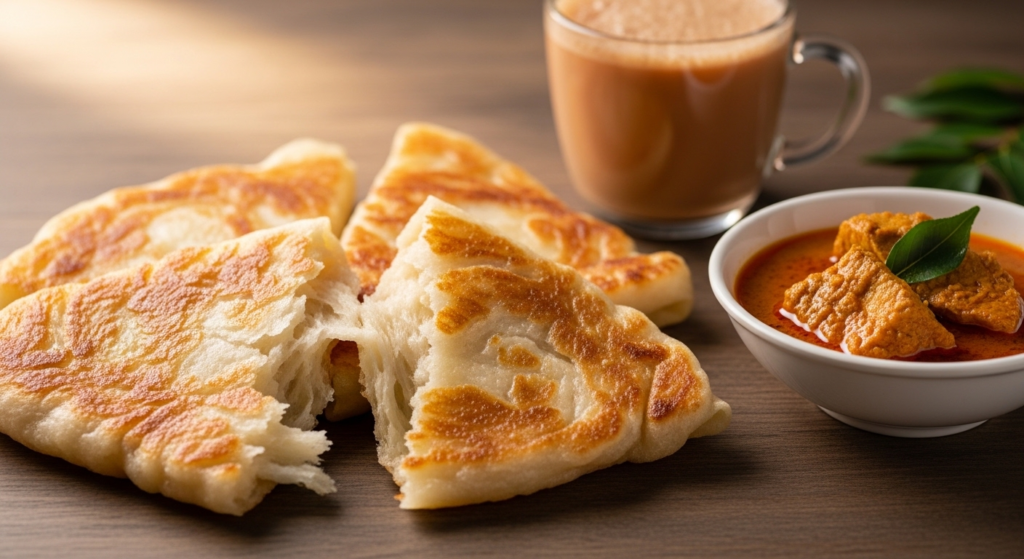
Brought by South Indian Muslim immigrants, this flaky, pan-fried flatbread is served with fish or mutton curry and is a beloved breakfast and supper food across all ethnic communities in Singapore.
Key Reasons Why Singapore Street Food Is Unique
Here’s a summary of the core factors that make Singapore’s street food scene truly one-of-a-kind:
- Multi-ethnic culinary heritage Chinese, Malay, Indian, and Peranakan traditions coexist and cross-influence each other in ways found nowhere else
- UNESCO recognition Singapore Hawker Culture was inscribed on the UNESCO Representative List of Intangible Cultural Heritage in 2020
- Michelin-starred affordability Singapore is the only country where you can eat Michelin-recognized food for under $5
- Government-regulated hygiene All hawker stalls are licensed and graded by the National Environment Agency (NEA), ensuring food safety at scale
- Generational mastery Many hawker stall owners have been perfecting a single dish for 30–50 years, passing the craft down through families
- 24/7 food culture Singapore never truly sleeps when it comes to food; supper culture is as strong as lunch culture
- Incredible density Over 6,000 stalls in 100+ hawker centres on an island the size of a small city
- Democratic pricing A full, nutritious, delicious meal costs between SGD $3–8, accessible to every income level
- Constant innovation Alongside traditional hawker food, Singapore also produces creative fusion interpretations that draw on its multicultural base
Singapores Michelin Street Food
In 2016, Singapore’s Michelin Guide made history. For the first time ever, a Michelin star was awarded to a street food stall Hawker Chan (Liao Fan Hong Kong Soya Sauce Chicken Rice & Noodle) making its owner, Chan Hon Meng, one of the most celebrated street food cooks on Earth. At just SGD $2 per plate, it became the world’s cheapest Michelin-starred meal.
This was not a gimmick. It was international confirmation of what Singaporeans already knew: that extraordinary food does not require a fine dining setting. Craftsmanship, time, and dedication produce greatness and Singapore’s hawker system has been proof of that for over 50 years.
Notable Michelin Recognized Singapore Street Food Stalls
| Stall Name | Dish | Hawker Centre | Recognition | Avg. Price (SGD) |
|---|---|---|---|---|
| Hawker Chan | Soya Sauce Chicken Rice | Chinatown Complex | 1 Michelin Star | $2–$3 |
| Hill Street Tai Hwa Pork Noodle | Bak Chor Mee | Crawford Lane | 1 Michelin Star | $6–$8 |
| Lian He Ben Ji Claypot Rice | Claypot Rice | Chinatown Complex | Bib Gourmand | $6–$9 |
| Outram Park Fried Kway Teow | Char Kway Teow | Hong Lim Market | Bib Gourmand | $3–$5 |
| Tian Tian Hainanese Chicken Rice | Chicken Rice | Maxwell Food Centre | Bib Gourmand | $4–$6 |
The Cultural Significance: Food as National Identity
In Singapore, food transcends ethnicity and religion. A Chinese Singaporean will queue 45 minutes for Indian Muslim Nasi Briyani. A Malay family will share a table at a Chinese run bak kut teh stall. Food is one of the few spaces in Singapore where all ethnic, religious, and socioeconomic groups genuinely mix and it has been that way for generations.
The hawker centre is, in many ways, Singapore’s town square. It’s where business deals are made over teh tarik, where families gather on weekends, where retirees play chess in the morning, and where teenagers meet after school. Food is the social glue of Singaporean society.
This cultural dimension makes Singapore street food not merely a culinary achievement but a sociological one. No other country has engineered such a successful, multicultural, affordable food commons at a national scale.
The Threat: Preserving a Disappearing Craft
Despite its UNESCO status and global fame, Singapore street food faces a genuine existential challenge: aging hawkers and a lack of successors. The average hawker is over 60 years old. Many stalls that have operated for 40–50 years are closing not because of poor business, but because the next generation prefers white-collar careers over the grueling 12–16 hour days of hawker life.
The Singapore government has responded with initiatives like the Hawkers’ Development Programme, which trains new hawkers and provides subsidized rental rates for hawker stalls. Social enterprises like Hawker Centre 3.0 are experimenting with tech-assisted hawker operations to reduce physical labour. Food schools and culinary institutes are documenting dying recipes.
Whether these efforts will be enough to save Singapore’s most precious cultural heritage remains to be seen but the urgency is real and widely acknowledged.
Attempts to Replicate Singapore Food Culture Globally
| City | Singapore Food Presence | Authenticity Level | Key Challenge |
|---|---|---|---|
| London | Several Singapore restaurants & food markets | Medium | Ingredient sourcing, high rental costs |
| New York City | Small Singaporean restaurants (e.g., Kopitiam) | Medium-Low | Lack of hawker infrastructure |
| Sydney | Some Malaysian-Singaporean crossover spots | Low-Medium | Visa restrictions limit authentic hawker migration |
| Kuala Lumpur | Similar hawker culture (overlapping dishes) | High | Closest authentic parallel outside Singapore |
| Tokyo | Very rare Singapore-specific restaurants | Low | Limited familiarity with Singaporean cuisine |
The honest answer is: no, it cannot be fully replicated. The magic of Singapore street food is inseparable from its context the tropical heat, the cultural diversity, the 50-year-old wok, the uncle who has been making the same char kway teow since before you were born, and the $3 price tag that makes it accessible to everyone.
You can cook the recipes elsewhere. You cannot recreate the ecosystem.
Conclusion
Singapore street food is unique in the world because it is the product of a perfect and unrepeatable storm of history, multiculturalism, government policy, culinary passion, and national identity. It is simultaneously humble and world-class, ancient and evolving, deeply local and internationally celebrated.
From a $2 plate of Michelin-starred chicken rice at Maxwell Food Centre to the smoky drama of a late-night satay grill at Lau Pa Sat, eating in Singapore is not just a meal it is participation in one of humanity’s great ongoing culinary stories.
If you have never stood in a hawker centre queue under the tropical evening sky, tray in hand, waiting for a plate that a master has spent a lifetime perfecting, you have a very good reason to book a flight to Singapore.