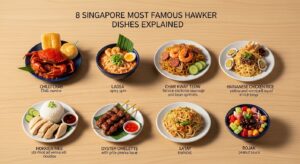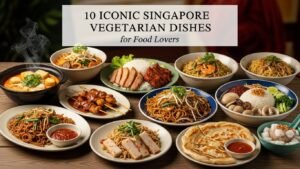


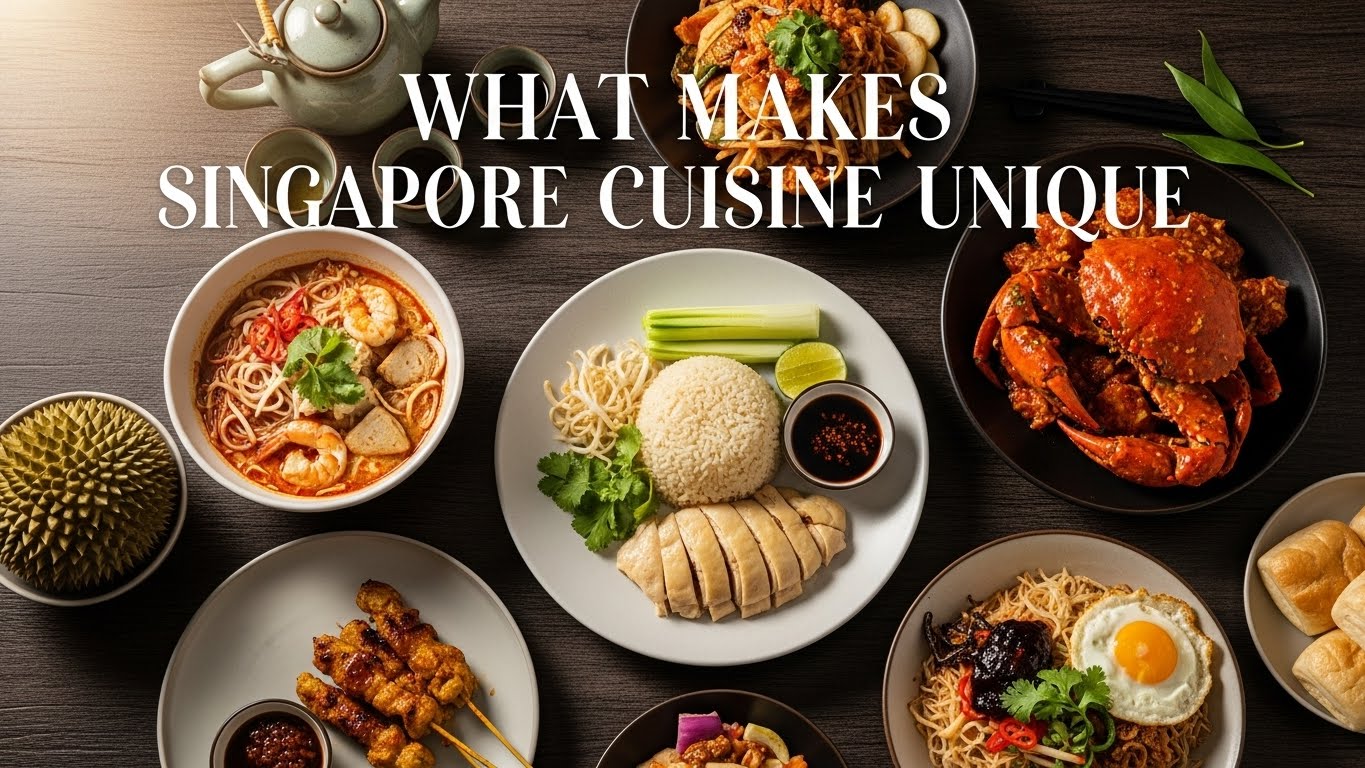
Singapore cuisine is defined by its multicultural roots, bold flavours, and exceptional balance of tradition and innovation. Influenced by Chinese, Malay, Indian, and Peranakan food cultures, it blends diverse cooking techniques, spices, and ingredients into dishes that are both distinctive and deeply authentic. From hawker centre classics like Hainanese chicken rice, laksa, and nasi lemak to refined restaurant interpretations, Singapore cuisine is built on precision, freshness, and a strong respect for culinary heritage. This fusion of cultures creates food that is layered, aromatic, and instantly recognisable across Asia and beyond.
What sets Singapore cuisine apart is not just its diversity, but the way quality, accessibility, and cultural identity intersect in everyday dining. Hawker culture ensures that world-class food remains affordable, while strict food standards preserve consistency and trust. At the same time, modern chefs continue to elevate traditional recipes without losing their original character. The result is a cuisine that reflects Singapore itself: globally influenced, meticulously crafted, and rooted in generations of culinary expertise making Singapore cuisine one of the most respected food traditions in the world.
A Cuisine Shaped by Migration and Multicultural Identity
To understand Singapore cuisine, you must first understand Singapore itself. The country is a cultural crossroads. As a trading hub for centuries, it attracted Chinese merchants, Malay communities, Indian labourers, Arab traders, and European settlers. Each group brought its own cooking methods, spices, and food philosophies.
Instead of remaining separate, these culinary traditions began to overlap. Ingredients were shared. Cooking styles were adapted to local tastes. A Chinese noodle dish might be seasoned with Malay sambal. Indian spices might appear in Peranakan stews. What emerged was not a collection of parallel cuisines, but a living, blended food culture.
This multicultural foundation explains why Singapore dishes feel both familiar and different. You may recognise elements from Chinese, Indian, or Southeast Asian cooking, but the final flavour profile is uniquely Singaporean refined through decades of cross cultural exchange.
Hawker Culture

At the heart of Singapore cuisine lies its hawker culture. Hawker centres are open-air food complexes where dozens of independent stalls sell affordable, freshly prepared meals. These are not fast-food outlets. Many stalls are family businesses passed down through generations, each specialising in one or two dishes perfected over time.
Hawker food represents the democratic nature of Singapore cuisine. Everyone eats here: office workers, students, tourists, and even chefs. A bowl of noodles or a plate of rice might cost only a few dollars, yet be crafted with the same care and technical skill as fine dining. For first-time visitors, exploring local hawker stalls and eats offers the most authentic introduction to Singapore’s food culture.
In 2020, Singapore’s hawker culture was recognised by UNESCO as an Intangible Cultural Heritage of Humanity. This acknowledgement reflects more than just food. It celebrates a social system where cooking, community, and cultural preservation intersect. Hawker centres are places where tradition is maintained not in museums, but in daily life.
A Balance of Flavours That Defines Singapore Dishes
One of the most distinctive features of Singapore cuisine is its mastery of flavour balance. Many dishes combine sweet, sour, salty, spicy, and umami elements in a single bite. This complexity does not come from excess, but from precision.
Where some cuisines focus on dominant heat or richness, Singapore food emphasises contrast. Coconut milk might soften chilli heat. Lime or tamarind adds brightness to rich gravies. Soy sauce and dried seafood deepen savoury notes. This careful layering creates dishes that feel bold but never overwhelming.
This flavour philosophy reflects the cultural blending behind the cuisine. Chinese techniques bring clarity and structure. Malay cooking contributes spice and aromatics. Indian traditions add depth through layered seasoning. Peranakan cuisine ties these elements together with intricate, slow-cooked preparations. The result is a culinary language that values harmony over heaviness.
Strict Food Standards and Culinary Precision

Another factor that sets Singapore cuisine apart is the country’s emphasis on food safety and hygiene. Singapore has some of the strictest food regulations in Asia. Hawker stalls, restaurants, and markets are regularly inspected and graded. Cleanliness, storage practices, and preparation standards are closely monitored.
This system ensures consistency and trust. Visitors can enjoy street food without concern, knowing that hygiene and quality are enforced nationwide. For locals, it reinforces a culture of professionalism in even the smallest food businesses.
Precision also defines the cooking itself. Recipes are not approximate. Measurements, timings, and techniques are refined through repetition. A chicken rice stall may prepare thousands of plates a week, each expected to meet the same standard. This focus on repeatable excellence is rare in street-food cultures elsewhere and contributes significantly to Singapore’s culinary reputation.
From Street Food to Fine Dining
What makes Singapore cuisine especially unique is the seamless connection between street food and fine dining. Traditional hawker dishes are not confined to informal settings. Many have been elevated into restaurant cuisine without losing their identity.
Some of the world’s most affordable Michelin-starred meals originate from hawker food. Dishes such as soy sauce chicken, char kway teow, or bak chor mee have been reinterpreted by chefs while preserving their core flavours. This reflects a broader culinary philosophy: innovation should enhance tradition, not replace it.
Fine-dining restaurants in Singapore often build their menus around local ingredients and heritage recipes. Modern techniques may be applied, but the flavour profiles remain recognisably Singaporean. This integration of past and present allows the cuisine to evolve while staying rooted in its cultural origins.
Iconic Dishes That Represent Singapores Identity

Certain dishes capture the essence of Singapore cuisine because they embody its multicultural roots and flavour philosophy.
Hainanese Chicken Rice
Often considered Singapore’s national dish, chicken rice combines Chinese cooking techniques with Southeast Asian ingredients. Poached chicken is served with fragrant rice cooked in chicken fat, accompanied by chilli sauce, ginger paste, and soy. Its simplicity hides remarkable technical precision. Many tourists first encounter it through curated lists of best Singapore food for tourists.
Laksa
Laksa represents the fusion of Chinese noodles with Malay and Peranakan spices. The most famous version, laksa lemak, features coconut milk broth infused with chilli, dried shrimp, and lemongrass. The result is creamy, spicy, and deeply aromatic.
Chilli Crab
Chilli crab is a modern classic that blends seafood traditions with bold, sweet-spicy sauce. The dish reflects Singapore’s coastal heritage and its love for robust, shareable flavours.
Nasi Lemak
Originally a Malay dish, nasi lemak has become a national staple. Coconut-infused rice is served with sambal, fried anchovies, peanuts, egg, and various proteins. Each component plays a role in balancing richness, heat, and texture.
Roti Prata
Influenced by Indian flatbreads, roti prata is crisp on the outside and soft within, often paired with curry. It illustrates how immigrant foods were adapted to local tastes and integrated into daily Singaporean life.
How Singapore Cuisine Compares to Other Asian Cuisines
Singapore cuisine is often compared with neighbouring food cultures, yet it maintains a distinct identity.
| Feature | Singapore Cuisine | Chinese Cuisine | Thai Cuisine | Indian Cuisine |
|---|---|---|---|---|
| Cultural Base | Multicultural fusion | Regional Chinese traditions | Thai national identity | Regional Indian traditions |
| Flavour Profile | Balanced, layered | Emphasis on technique | Strong sweet-spicy contrast | Deep spice layering |
| Accessibility | Hawker culture, affordable | Varied street food | Street food culture | Regional home cooking |
| Regulation | Strict hygiene laws | Less centralised | Informal markets | Informal markets |
Unlike cuisines rooted in one dominant tradition, Singapore’s food culture thrives on integration. It does not belong to one ethnicity or region. This makes it adaptable, inclusive, and globally appealing.
Cultural Influences Behind Singapore Cuisine
| Cultural Group | Contribution to Cuisine | Example Dishes |
|---|---|---|
| Chinese | Noodles, soy-based sauces, stir-frying | Chicken rice, char kway teow |
| Malay | Spices, coconut milk, sambal | Nasi lemak, satay |
| Indian | Curries, flatbreads, spice blends | Roti prata, fish head curry |
| Peranakan | Fusion of Chinese and Malay | Laksa, ayam buah keluak |
Each influence is preserved, yet none dominates. Singapore cuisine is not a melting pot where identities disappear, but a mosaic where each tradition retains its character while contributing to a greater whole.
Hawker Food vs Fine Dining in Singapore
| Aspect | Hawker Cuisine | Fine Dining |
|---|---|---|
| Price | Affordable | Premium |
| Atmosphere | Casual, communal | Formal, curated |
| Technique | Repetition, tradition | Innovation, presentation |
| Purpose | Daily nourishment | Culinary experience |
Both forms coexist without hierarchy. A hawker dish can be just as respected as a restaurant creation. This equality reinforces the idea that culinary value in Singapore lies in craftsmanship, not exclusivity.
Why Singapore Cuisine Stands Out Globally
Singapore cuisine’s global reputation is built on four pillars:
Cultural Authenticity:
Each dish carries real historical and cultural meaning. Recipes are tied to communities, festivals, and everyday life.
Flavour Precision:
The balance of tastes is deliberate. Dishes are designed to stimulate the palate without overwhelming it.
Accessibility:
High-quality food is available to everyone. World-class meals do not require luxury settings, as shown in budget-friendly Singapore food spots.
Innovation Without Loss of Identity:
Modern chefs reinterpret traditional dishes while respecting their origins. The cuisine evolves without losing its core.
Together, these elements make Singapore food both approachable and profound.
The Social Role of Food in Singapore

Food in Singapore is not merely sustenance; it is social glue. Families gather at hawker centres. Business meetings happen over kopi and kaya toast. Late-night meals become rituals after work or study. Conversations often begin with one simple question: “Have you eaten?”
This food-centred culture strengthens the emotional connection between people and cuisine. Dishes are associated with memories, neighbourhoods, and shared experiences. As a result, Singapore cuisine is not just consumed it is lived.
The Global Influence of Singapore Cuisine
Singapore’s food culture has begun influencing international dining. Singaporean restaurants appear in major cities worldwide. Dishes like chilli crab, laksa, and chicken rice have entered global food vocabulary.
Unlike cuisines that export only high-end interpretations, Singapore exports its everyday food culture. This reinforces the idea that culinary excellence does not require formality. It is found in simplicity, repetition, and respect for tradition.
Conclusion
Singapore cuisine is unique because it reflects the nation itself: diverse, disciplined, and deeply connected to everyday life. Built from centuries of migration, shaped by cultural exchange, and refined through precision and regulation, it stands apart from other food traditions. Its hawker culture preserves authenticity while making quality accessible. Its flavours balance boldness with harmony. Its evolution respects heritage while embracing innovation.
In a world where many cuisines are defined by singular traditions, Singapore cuisine is defined by unity within diversity. It is not just food. It is a living cultural expression one that continues to adapt while remaining unmistakably Singaporean.
Frequently Asked Questions
1.Why is Singapore cuisine different from other Asian cuisines?
Singapore cuisine is different because it blends Chinese, Malay, Indian, and Peranakan traditions into one integrated food culture. Rather than following a single heritage, it combines techniques and flavours from multiple cultures, creating dishes that are balanced, layered, and uniquely Singaporean.
2.Is Singapore cuisine Chinese, Malay, or Indian?
Singapore cuisine is none of these alone. It draws from all three, along with Peranakan influences. While individual dishes may reflect one tradition, the overall food culture is a fusion shaped by migration and shared culinary practices.
3.Why is hawker food so important in Singapore?
Hawker food is central because it preserves traditional recipes, ensures affordability, and fosters community. Hawker centres are where culinary heritage is practiced daily, making them essential to Singapore’s food identity.
4.What dish best represents Singapore cuisine?
Hainanese chicken rice is often seen as the national dish because it reflects Singapore’s cultural blending, technical precision, and focus on flavour balance. However, laksa, chilli crab, and nasi lemak are equally representative.
5.Why is Singapore food trusted by tourists?
Strict hygiene regulations, consistent quality standards, and a culture of culinary professionalism ensure that food is both safe and reliable, even in street-food settings.