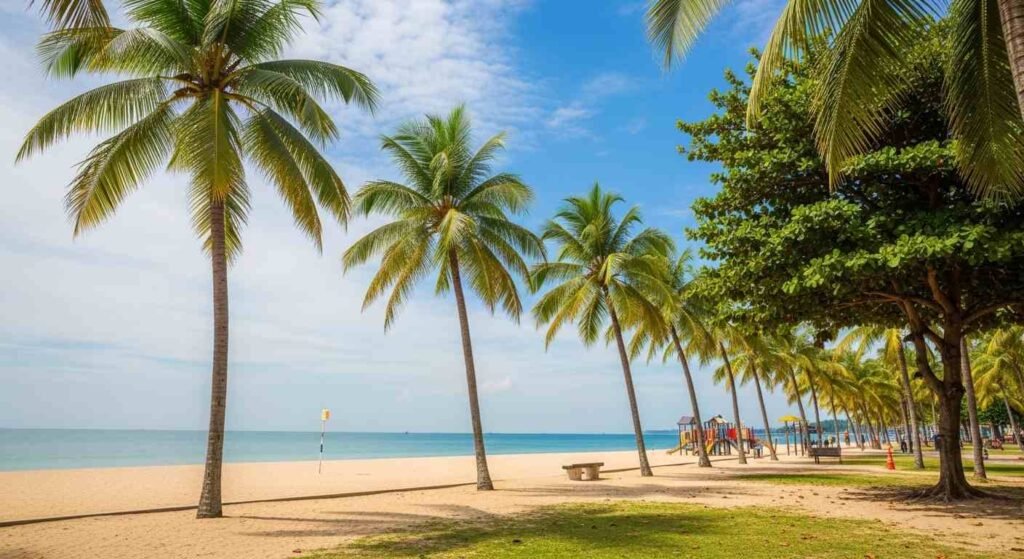
Most visitors to Singapore spend their outdoor time at Sentosa Island. Locals know better.
The east side of Singapore is where you find the real outdoor culture. It is where families set up BBQ pits on Friday evenings, where cyclists ride 15 kilometre loops before sunrise, where birdwatchers spot hornbills in mangrove forests, and where the whole city seems to slow down.
From the iconic 185 hectare stretch of East Coast Park to the wild, untouched shores of Coney Island, the east is packed with green spaces, sandy beaches, nature trails, and waterfront parks, most of which are completely free to enter.
This guide covers all 13 of the best beaches and parks on the east side of Singapore, with practical details on what to do, how to get there, and the best time to visit each one.
Comparison Table Of 13 East Singapore Beaches and Parks at a Glance
| Name | Type | Best For | Entry Fee |
|---|---|---|---|
| East Coast Park | Beach and Park | Families, cycling, food | Free |
| Changi Beach Park | Beach and Park | Plane spotting, BBQ, camping | Free |
| Pasir Ris Park | Beach and Park | Mangroves, kids, birdwatching | Free |
| Coney Island Park | Nature Island | Wildlife, hiking, photography | Free |
| Bedok Reservoir Park | Reservoir Park | Kayaking, jogging, cycling | Free |
| Tampines Eco Green | Eco Park | Birdwatching, quiet nature walks | Free |
| Punggol Beach | Beach | Sunset photography, fishing | Free |
| Pulau Ubin | Island | Cycling, kampung culture, Chek Jawa | Bumboat fare only |
| Changi Point Coastal Walk | Coastal Trail | Scenic walks, heritage | Free |
| Parkland Green at ECP | Beachfront Hub | Dining, recreation, sea views | Free |
| Bedok Jetty (ECP Area F) | Jetty | Fishing, sunrise, cycling | Free |
| East Coast Park Beach (Zones A to H) | Beach | Swimming, picnics, water sports | Free |
| Lagoon Food Village at ECP | Beach Precinct | Hawker food by the sea | Free (food costs apply) |
1. East Coast Park: Singapore’s Most Beloved Coastal Park
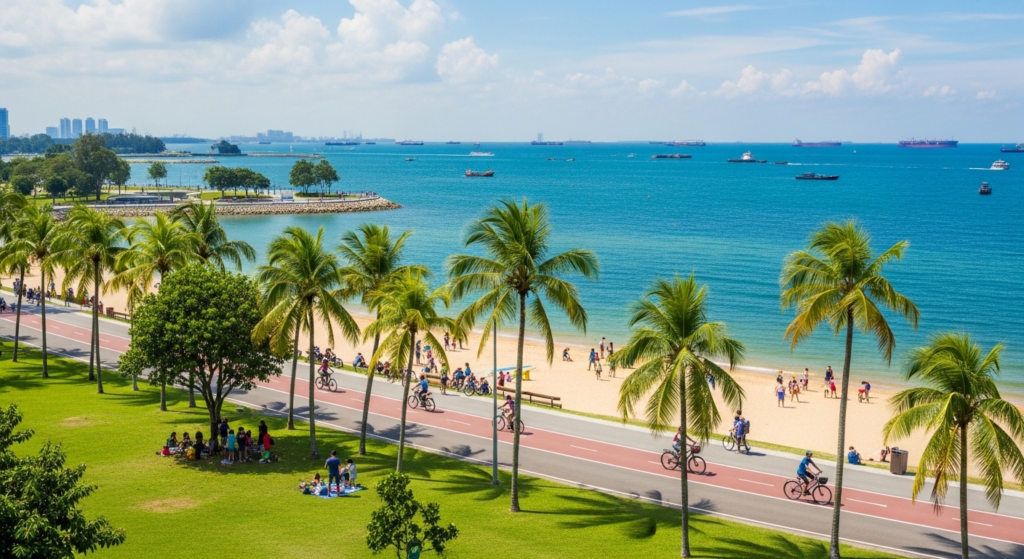
Location: East Coast Park Service Road, Singapore 449876 Nearest MRT: Marine Parade (TE26), Marine Terrace (TE27), Siglap (TE28), or Bayshore (TE29) on the Thomson East Coast Line Opening hours: 24 hours daily Entry fee: Free
East Coast Park (ECP) is the undisputed king of outdoor recreation in Singapore. Spanning 185 hectares along the southeastern coast, this is Singapore’s largest park and arguably its most loved. Built entirely on reclaimed land from the 1970s onwards, it stretches over 15 kilometres from Kallang all the way toward Changi Airport.
The park is divided into eight zones from A to H, each with its own character and facilities. Whether you want to swim, cycle, rollerblade, BBQ, camp, kayak, wakeboard, or simply eat seafood by the sea, East Coast Park has it.
What to Do at East Coast Park
Cycling and rollerblading: The dedicated cycling track runs the full length of the park and connects directly to other park connectors, allowing you to ride all the way to Gardens by the Bay. If you are planning a cycling trip here, the complete guide to cycling at East Coast Park covers rental spots, route options, and tips for first-timers. Bicycle rental starts from around $5 to $8 per hour at multiple shops along the park.
Water sports: Ski 360 at Area D offers cable towed wakeboarding from $32 per hour. PAssion WaVe at Area G rents kayaks from $5 per hour and offers windsurfing lessons and equipment rental.
Swimming: The beach is protected by breakwaters which keep the water relatively calm. While not crystal clear, it is safe for swimming in designated areas.
Marine Cove Playground: One of the most popular playgrounds in Singapore, with towering climbing structures, water play, and slides for children of all ages.
Xtreme SkatePark: A professional skate facility with ramps and obstacles, open to anyone from beginners to advanced riders.
BBQ and camping: You can book BBQ pits in advance via the NParks website. Camping is allowed in designated areas with an NParks permit.
Best Time to Visit East Coast Park
Early mornings on weekdays are best for cycling and jogging. Weekday afternoons are ideal for a quiet beach session. Weekends get busy but have the best atmosphere with food stalls, music, and a lively crowd.
2. East Coast Park Beach: Eight Zones, Endless Possibilities
Location: Along East Coast Park Service Road Nearest MRT: Marine Parade, Bayshore, or Siglap (Thomson-East Coast Line) Opening hours: 24 hours Entry fee: Free
While East Coast Park covers the entire park area, the beach itself deserves its own mention. The sandy stretch runs across multiple zones and offers something slightly different in each section.
Zone A and B near Kallang are quieter and less developed. Zone D around Marine Cove is the most family-oriented with the largest playground. Zone F at Bedok has the famous Bedok Jetty. Zone G near Bedok Interchange is home to water sports rentals and the lagoon food village.
The sand is imported white sand, kept clean and raked regularly by NParks. Breakwaters protect the swimming areas from strong currents. Look out for the red flag system, as swimming is prohibited when a red flag is raised.
What makes this beach different from others: The combination of beach, food, water sports, cycling tracks, and playgrounds all in one long stretch makes East Coast Park Beach one of the most complete coastal experiences in Southeast Asia, not just Singapore.
3. Changi Beach Park: Peaceful Shores and Plane Spotting Paradise
Location: Nicoll Drive, Singapore 498991 Nearest MRT: Tanah Merah (EW4), then Bus 35 or Bus 3 toward Changi Village Opening hours: 24 hours Entry fee: Free
Changi Beach is one of Singapore’s longest beaches at 3.3 kilometres, and one of its most distinctive. Located at the far eastern tip of the island, it sits directly below the flight path into Changi International Airport. Every few minutes, a plane descends low overhead on its final approach, which makes for an extraordinary backdrop that no other beach in Singapore can offer.
The beach is wider and more open than East Coast Park, with shallow, calm waters sheltered by the Johor Strait. The park surrounding the beach has shaded shelters, BBQ pits, cycling and walking paths, and a restaurant that serves local food.
Why Changi Beach Park Stands Apart
The area carries significant historical weight. During the Japanese Occupation in 1942, Changi Beach was a site of the Sook Ching massacre, where thousands of young Chinese men were executed. Information boards along the beach tell the story, making a visit here as historically educational as it is scenic.
Plane spotting: Position yourself near the beach in the late afternoon and watch wide-bodied aircraft descend just a few hundred metres above the treeline. Aviation enthusiasts consider this one of the best free plane-spotting spots in Asia.
Camping: Designated camping areas are available with an NParks permit. The facilities include clean toilets and shower blocks.
Changi Village Hawker Centre: A short walk or cycle from the beach, the hawker centre is famous for its nasi lemak, popiah, and char kway teow. If you want to understand why Singapore street food is so unique in the world, a meal here makes the case better than any article can. Do not leave without eating here.
How to Get There
Take the MRT to Tanah Merah and board Bus 35 to Changi Village. From there it is a short walk to the beach. If cycling, follow the Eastern Coastal Loop of the Park Connector Network from East Coast Park.
4. Pasir Ris Park: Mangroves, Ponies, and Family Fun
Location: Pasir Ris Central, Singapore 519579 Nearest MRT: Pasir Ris (EW1), then walk 10 minutes or take feeder Bus 403 or 858 Opening hours: 24 hours Entry fee: Free
Pasir Ris Park is a six-kilometre-long park built on partially reclaimed land at the northeastern edge of Singapore. It is one of the largest parks in Singapore and one of the most diverse in terms of what it offers.
Unlike East Coast Park which focuses on beach recreation, Pasir Ris Park is built around four distinct zones covering mangrove forests, a beachfront, chalets and water parks, and a massive playground that is one of the biggest in the country.
What Makes Pasir Ris Park Special
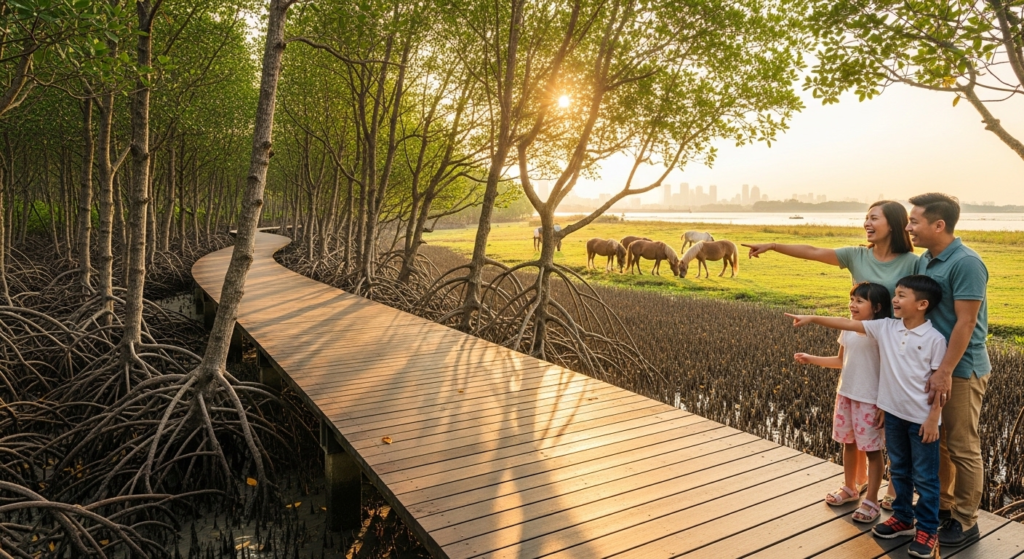
Mangrove boardwalk: A timber boardwalk stretches through a genuine mangrove forest, one of the few accessible ones in Singapore. You can spot mudskippers, fiddler crabs, herons, and kingfishers without a guide.
Bird watching tower: A three-storey lookout tower sits at the edge of the mangroves and offers sweeping views over the forest canopy and toward the sea. Bring binoculars if you are a serious birder.
Ponies: Yes, there are ponies at Pasir Ris Park. The Pasir Ris Horse Riding Centre offers pony rides and riding lessons for children.
Playground: Arguably the largest playground in Singapore, with climbing frames, swings, slides, and dedicated zones for different age groups. Families travel from across the island just for this playground.
Camping and chalets: Designated camping areas require an NParks permit. Chalets (including beachfront ones) can be rented for overnight stays through SingapoRediscovers or the chalet operators directly.
Beach: The beach is not the widest or most manicured in Singapore, but it is calm, shallow, and great for paddling and casual swimming. Sunset here is particularly beautiful.
Best Activities at Pasir Ris Park
Rent bicycles, cycle along the park connector linking Pasir Ris to Changi Beach, walk the mangrove boardwalk, have a BBQ at the beachfront pits, or let the kids loose on the mega playground. This is a full-day destination.
5. Coney Island Park: Singapore’s Wild Eastern Gem
Location: Punggol Promenade Nature Walk, Singapore 829325 Nearest MRT: Punggol (NE17), then Punggol LRT East Loop to Coral LRT, then walk Opening hours: 7:00 AM to 7:00 PM daily Entry fee: Free
Coney Island, also known as Pulau Serangoon, is one of Singapore’s most underrated outdoor destinations. Connected to the mainland by two bridges at the north and south ends, this small island sits off the northeastern coast of Singapore near Punggol.
Unlike the manicured parks of central Singapore, Coney Island is deliberately kept wild. The trails are mostly unpaved. The beaches are natural rather than sculpted. The vegetation is dense casuarina forest, secondary scrubland, and patches of coastal woodland. It feels genuinely remote despite being a short bus ride from an MRT station.
What to Do at Coney Island
Wildlife watching: Over 80 species of birds have been recorded here, including the male Baya Weaver, Oriental Magpie-Robin, and flocks of parakeets. You may also spot monitor lizards and other reptiles along the trails.
Hiking and walking: The full loop around the island covers approximately 5.5 kilometres. The terrain is varied from open coastal paths to shaded forest trails. Sturdy footwear is recommended.
Beach time: Five beaches line the western side of Coney Island across a two-kilometre stretch. The sand is natural, the water is calm, and the views extend toward Pulau Ubin and Malaysia. Apply insect repellent before entering the beach areas as sandflies can be a problem.
Cycling: Cycling is permitted on certain designated paths on the island. Rent a bicycle at Punggol and ride over the bridge.
Photography: The casuarina trees, curving beaches, and wildlife make this one of the best photography locations in eastern Singapore.
Important Notes for Visiting Coney Island
There are no food or beverage outlets on the island. Bring your own water and snacks. The island closes at 7:00 PM daily. If you miss the closing time, you may find the entry gates locked. Start your visit by 10:00 AM at the latest to explore comfortably.
6. Bedok Reservoir Park: Water Sports in the Heart of the East
Location: Bedok North Avenue 3, Singapore 469698 Nearest MRT: Bedok Reservoir (DT32) Opening hours: 24 hours (water activities operate on set hours) Entry fee: Free to enter; activity fees apply
Bedok Reservoir Park is the only park in the east with a large inland water body, making it unique among the coastal parks that dominate this part of Singapore. The reservoir was originally a sand quarry and was converted into a recreational water body in the 1980s.
Today, the 87-hectare park wrapped around the reservoir is a fitness hub for eastern Singapore residents. The flat loop around the reservoir is popular for jogging, cycling, and inline skating. Kayaking and dragon boat activities take place on the water itself.
Activities at Bedok Reservoir Park
Kayaking: PAssion WaVe at Bedok Reservoir operates kayak and canoe rentals. Equipment is available for a small hourly fee.
Jogging and cycling: The 4.3-kilometre perimeter path is well-lit and maintained, making it a favourite for evening runs and weekend cycling.
Playground: A children’s play area with traditional sandpit play and climbing structures is located near the main entrance.
Fishing: Fishing is permitted in designated areas of the reservoir. A valid fishing licence from the National Environment Agency is required.
Sunrise and sunset: The open water and surrounding greenery make Bedok Reservoir particularly beautiful at golden hour. Photographers often set up here for long-exposure shots of the water.
7. Tampines Eco Green: A Hidden Nature Sanctuary in the East
Location: Tampines Ave 9, Singapore 529302 Nearest MRT: Tampines (EW2 / DT32), then a short bus or cycling ride Opening hours: 24 hours Entry fee: Free
Tampines Eco Green is the kind of park that you might walk past without realising its significance. Tucked between the Tampines housing estates, this 36-hectare park is a genuine secondary nature reserve, not a manicured garden.
The park was developed with a minimal intervention philosophy. The vegetation is mostly secondary forest, freshwater wetlands, and shrubby grassland. Over 100 bird species have been recorded within the park, and it is one of the few places in Singapore where you can reliably spot the Straw-headed Bulbul, a critically endangered bird.
What Makes Tampines Eco Green Worth Visiting
Birdwatching: This is one of the top birdwatching sites in Singapore. Visit early in the morning for the best bird activity. Common sightings include the Blue-tailed Bee-eater, Collared Kingfisher, and various migratory species during the northeast monsoon season.
Nature photography: The wetland areas with their reflective pools and surrounding vegetation offer excellent photography opportunities, especially during the blue hour after sunrise.
Quiet walking trails: Unlike the busy parks along the coast, Tampines Eco Green rarely feels crowded. The trails are simple but pleasant, winding through varied habitats.
Educational value: Information boards along the paths explain the different ecosystems and species you might encounter, making this a great educational walk for families and school groups.
8. Punggol Beach: Peaceful Sunsets and Old Singapore Vibes
Location: Punggol Point, Singapore 829716 Nearest MRT: Punggol (NE17), then Punggol LRT East Loop to Punggol Point Opening hours: 24 hours Entry fee: Free
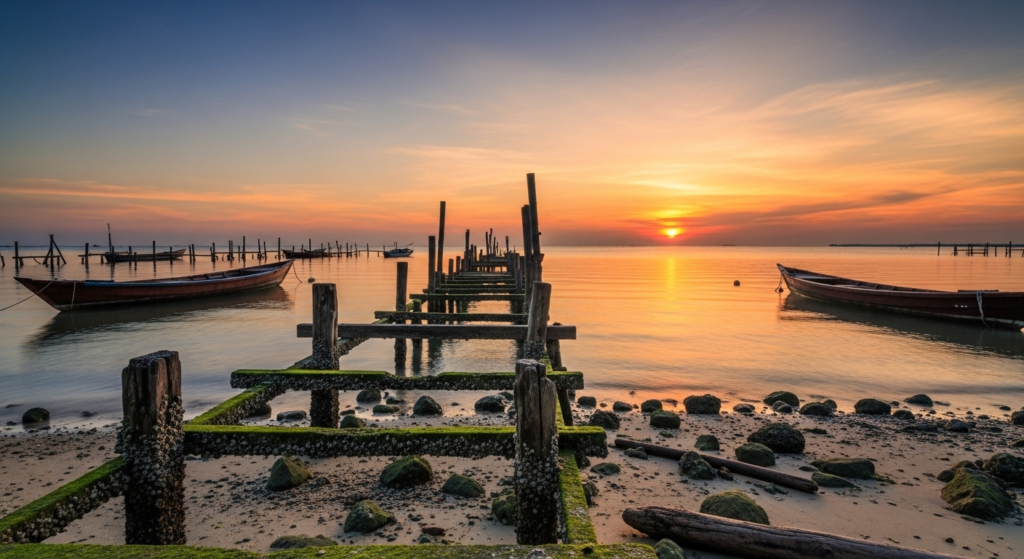
Punggol Beach is not your typical white-sand beach. It is rocky, raw, and steeped in history. Located at the northern tip of Punggol, it overlooks the Johor Strait toward Malaysia and offers some of the most dramatic sunset views in eastern Singapore.
The beach is characterised by distinctive boulders and rocks along the shoreline, which create a rugged and photogenic landscape. It is a popular fishing spot among locals who come to cast nets and lines for crabs and prawns directly from the rocks.
Historical Significance of Punggol Beach
Punggol Beach carries the same historical weight as Changi Beach. During the Sook Ching Operation of 1942, the beach was one of the execution sites used by the Japanese military. Information boards along the beach detail this history, and a memorial stands in remembrance of those who lost their lives here.
Best Reasons to Visit Punggol Beach
Sunset photography: The open north-facing aspect and rocky foreground make this one of the most photogenic sunset spots in Singapore. Visit in the late afternoon and stay for the golden hour.
Fishing: Local fishermen gather here regularly. If you enjoy recreational fishing, this is one of the few spots in eastern Singapore where you can fish from the shoreline itself.
Quietness: Unlike East Coast Park, Punggol Beach sees far fewer visitors. If you want a peaceful, contemplative beach experience away from the crowds, this is your spot.
Punggol Promenade: The waterfront promenade nearby offers a pleasant walk with views toward Coney Island and the strait.
9. Pulau Ubin: A Glimpse of Old Singapore on a Rustic Island
Location: Off the northeastern coast of Singapore, accessible from Changi Point Ferry Terminal Getting there: Take MRT to Tanah Merah, then Bus 2 to Changi Point Ferry Terminal. A bumboat (about $4 one way) takes 10 minutes to the island. Opening hours: Island open daily; last bumboat back is typically around 7:00 PM Entry fee: Bumboat fare only
Pulau Ubin is not technically part of the east coast of Singapore, but it is accessed from it and is deeply connected to the culture and identity of eastern Singapore. It is one of the last places in Singapore where you can experience what the island looked like before rapid urbanisation.
The island is home to Singapore’s last remaining kampungs (traditional villages), working granite quarries converted into scenic lakes, wild jungle, and the extraordinary Chek Jawa Wetlands.
What to Do on Pulau Ubin
Cycling: Rent a bicycle at the bumboat jetty for around $5 to $10. Cycling is by far the best way to explore the island. The trails range from paved paths to muddy jungle tracks.
Chek Jawa Wetlands: A 1-kilometre boardwalk runs through one of Singapore’s richest coastal ecosystems, covering mangroves, coastal forest, rocky shore, sandy beach, and coral rubble flat. Wildlife includes otters, sea eagles, and countless intertidal species.
Quarry lakes: The flooded granite quarries create stunning emerald-green lakes surrounded by rocky cliffs and jungle. These are not open for swimming but are extraordinary to look at.
Village kampung atmosphere: Stop at the village near the jetty for a cold drink and local snacks. The old zinc-roofed houses and wandering chickens feel like a completely different world from the rest of Singapore.
Wildlife: Monitor lizards, wild boars, long-tailed macaques, sea eagles, and hornbills are all regularly spotted on the island.
Practical Tips for Pulau Ubin
Bring cash as there are no ATMs on the island. Bring insect repellent. Arrive early on weekends to avoid the bumboat queues. Pack sufficient water. The island has no air conditioning anywhere, so dress for the heat and humidity.
10. Changi Point Coastal Walk: Singapore’s Most Underrated Scenic Trail
Location: Starts from Changi Beach Park and extends toward Changi Point Ferry Terminal Nearest MRT: Tanah Merah (EW4), then Bus 35 Distance: Approximately 2.2 kilometres one way Opening hours: 24 hours Entry fee: Free
The Changi Point Coastal Walk is one of Singapore’s most scenic walking trails that relatively few visitors know about. The path follows the coastline from Changi Beach through secondary forest and mangroves all the way to the bumboat terminal where ferries depart for Pulau Ubin.
The trail combines coastal views, boardwalk sections over mangrove areas, shaded forest paths, and open seafront stretches. The combination of scenery makes it feel longer and more adventurous than its 2.2-kilometre distance suggests.
What to Expect Along the Trail
Mangrove sections: Elevated boardwalks take you over genuine mangrove forest where you can observe the distinctive prop roots and the crabs and mudskippers living among them.
Sea views: Open sections of the trail offer unobstructed views toward Johor and the islands of the Johor Strait. This is particularly magical at dusk.
Low flying planes: The trail runs beneath the flight path of Changi Airport, so every few minutes another aircraft passes overhead on its approach.
Heritage buildings: Old British military structures are visible from parts of the trail, serving as a reminder of Singapore’s colonial past and wartime history.
Wildlife: Look out for hornbills, kingfishers, and water monitor lizards along the mangrove sections of the trail.
Combine with Pulau Ubin: The trail ends at the Changi Point Ferry Terminal, making it a natural starting point for a ferry trip to Pulau Ubin.
11. Bedok Jetty: Sunrise, Fishing, and Sea Views
Location: Area F, East Coast Park, Singapore Nearest MRT: Bayshore (TE29) or Bedok (EW5), then walk or cycle Opening hours: 24 hours Entry fee: Free
Bedok Jetty is the longest fishing jetty in Singapore at 250 metres. It juts out into the strait at the eastern end of East Coast Park and offers one of the best unobstructed views of the sea from the park. On a clear morning, you can see cargo ships anchored across the horizon and, on exceptionally clear days, the low hills of Batam Island in Indonesia.
The jetty was originally built by a local businessman in 1966 and was used for importing scrap metal during the Vietnam War era. Today it is a free public facility open to everyone.
Why Bedok Jetty Is Worth a Visit
Sunrise: Walking to the end of the jetty at sunrise is one of the most peaceful experiences you can have in eastern Singapore. The light reflecting off the sea and the stillness of early morning makes this a favourite among early risers.
Fishing: The jetty is consistently rated as the most popular fishing spot in Singapore. Common catches include barramundi, snapper, and squid. You will almost always find local fishermen here at any hour.
Photography: The geometric lines of the jetty extending into the sea, combined with the moody early morning light, make for compelling photographs.
Cycling: The cycling path from East Coast Park extends to the jetty, making it a natural turnaround point for a cycling route.
12. Parkland Green at East Coast Park: Beachfront Dining and Recreation
Location: East Coast Parkway, Singapore (near Area D) Nearest MRT: Marine Terrace (TE27) or Siglap (TE28) Opening hours: Varies by restaurant; outdoor areas are 24 hours Entry fee: Free to enter
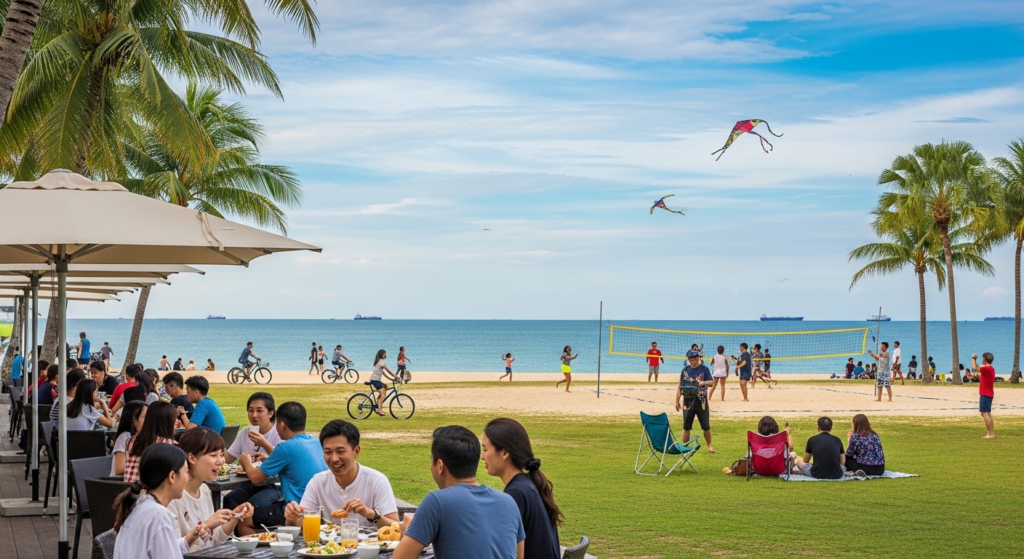
Parkland Green is the main dining and recreation hub within East Coast Park. Located at Area D near Marine Cove, this compact beachfront precinct is where you go when you want to combine food, drinks, and sea views in one spot.
Several restaurants and cafes line the edge of the park facing the beach, including PS Cafe by the Sea, Belgian Beer Cafe, and Casa Bom Vento. The outdoor seating areas extend right to the edge of the beach, giving you an unobstructed view of the water while you dine.
The area is connected directly to the Marine Cove Playground and the main cycling path, making it easy to combine a meal with a beach session or a cycle ride.
Best Experiences at Parkland Green
Beachfront dining: Sit outside at PS Cafe or Belgian Beer Cafe for cocktails or coffee while watching the sunset over the South China Sea.
Weekend markets: Pop-up markets and events are regularly held in the Parkland Green area on weekends.
Yoga and fitness: Early morning yoga classes and fitness bootcamps are often run on the grass areas near Parkland Green.
13. East Coast Lagoon Food Village: Hawker Food by the Sea
Location: Area G, East Coast Park, near Bedok Nearest MRT: Bedok (EW5) or Bayshore (TE29) Opening hours: Approximately 11:00 AM to 10:00 PM (stalls vary) Entry fee: Free
No visit to East Coast Park is complete without stopping at East Coast Lagoon Food Village. This is one of the most famous hawker centres in Singapore, and its location right next to the beach, with an unobstructed sea breeze, makes eating here an experience unlike any other hawker centre in the country.
The food here is built around a handful of legendary stalls. Satay skewers grilled over charcoal, served with peanut sauce and ketupat rice cakes, are what the food village is best known for. The stall operators have been grilling satay here for decades, and the smoky fragrance hits you before you even enter the seating area.
What to Eat at East Coast Lagoon Food Village
Satay: The BBQ satay here is considered some of the best in Singapore. Order a mixed platter of chicken, mutton, and beef skewers with extra peanut sauce.
Char kway teow: Flat rice noodles wok-fried with cockles, Chinese sausage, egg, and bean sprouts in a rich dark sauce. Seek out the stalls with the longest queues.
Barbecue stingray: A uniquely Singaporean dish of stingray marinated in sambal chilli sauce and grilled on a banana leaf over charcoal.
Chilled coconut: End with a chilled young coconut served whole, drunk with a straw.
Best time to visit: The food village is busiest on Friday and Saturday evenings when the combination of sea breeze, hawker smells, and weekend energy is at its peak. Come hungry.
Practical Tips for Visiting East Singapore’s Beaches and Parks
Best Time to Visit
The best months for outdoor activities in East Singapore are February through September when Singapore is in its drier period. Mornings between 7:00 AM and 10:00 AM are ideal for cycling and walking before the heat peaks. Late afternoons from 4:00 PM onward are pleasant as the temperature drops and the light becomes golden.
During the northeast monsoon from November to January, expect afternoon rain showers. Parks remain open and can still be visited, but plan around the weather.
Getting Around East Singapore’s Parks
Most major parks are connected via the Eastern Coastal Park Connector Network, a cycling and walking path that links East Coast Park, Pasir Ris Park, and Changi Beach Park in one continuous route. This makes it possible to cycle from one end of the eastern coast to the other in a single morning.
All parks except Pulau Ubin and Coney Island are accessible by MRT and bus. The Thomson-East Coast Line has stations at Marine Parade, Marine Terrace, Siglap, and Bayshore that provide excellent access to East Coast Park specifically.
What to Bring
- Sunscreen: Singapore sits just one degree north of the equator. UV levels are extreme, even on cloudy days.
- Insect repellent: Essential for Coney Island, Pasir Ris mangroves, and the Changi Coastal Walk.
- Water: Bring more than you think you need. Dehydration is a real risk outdoors in Singapore’s heat.
- Cash: Pulau Ubin has no ATMs. East Coast Lagoon Food Village stalls are mostly cash only.
- Comfortable shoes: Coney Island trails are unpaved. Flip flops are fine for the beach but not for nature walks.
Which Park Is Right for You
For families with young children: East Coast Park (Marine Cove Playground) or Pasir Ris Park (mega playground and mangrove boardwalk)
For cyclists: East Coast Park to Changi Beach via the Eastern Coastal Loop
For nature and wildlife: Coney Island, Tampines Eco Green, or Chek Jawa on Pulau Ubin
For quiet and solitude: Punggol Beach, Tampines Eco Green, or the Changi Point Coastal Walk
For food and atmosphere: The East Coast Lagoon Food Village and Parkland Green at ECP serve up hawker classics with an unbeatable sea breeze as the backdrop.
For history: Changi Beach (Sook Ching memorial), Pulau Ubin (kampung heritage), Bedok Jetty (wartime history)
For sunrise or sunset: Bedok Jetty (sunrise), Punggol Beach (sunset), Changi Beach (both)
Conclusion
From the 15 kilometre cycling stretch of East Coast Park to the wild casuarina forests of Coney Island, the east side of Singapore has more outdoor character than any other part of the city-state.
It is the side of Singapore where space has been preserved, where families still gather for weekend BBQs, where cyclists arrive before sunrise, where fishermen set their lines at midnight, and where the best satay in the country is served with a sea breeze.
If you only have one day to spend outdoors in Singapore, spend it in the east.
Frequently Asked Questions
1.Are the beaches in East Singapore free to enter?
Yes. All beaches and parks listed in this guide are free to enter. The only costs are the bumboat fare to Pulau Ubin (approximately $4 each way), activity rentals like bicycles and kayaks, and food and beverage purchases. Camping requires a free NParks permit applied in advance.
2.Is swimming safe at East Coast Park and Changi Beach?
Swimming is generally safe at East Coast Park, which has breakwaters protecting the beach from strong currents. Changi Beach also has relatively calm waters. Always observe the flag system: a red flag means swimming is prohibited. Neither beach has permanent lifeguard stations outside of designated events, so adult supervision is essential for children.
3.Can I cycle from East Coast Park all the way to Changi Beach?
Yes. The Eastern Coastal Park Connector Network links East Coast Park, Pasir Ris Park, and Changi Beach in one continuous cycling path. The full route from West Coast Park in the west to Changi in the east is approximately 42 kilometres. The stretch from East Coast Park to Changi Beach alone is about 20 kilometres. Bicycles can be rented at East Coast Park or from bike-sharing apps at the start of your route.
4.Are there sharks or jellyfish at Singapore’s east coast beaches?
Shark sightings are extremely rare and there have been no known shark attacks at Singapore public beaches in recent history. Jellyfish do occasionally appear, particularly during certain seasons. If you see jellyfish, do not swim. Check for warning signs at the beach entrance. Vinegar can help relieve mild jellyfish stings; seek medical attention if symptoms worsen.
5.Can I camp overnight at East Singapore beaches?
Camping is permitted at East Coast Park, Changi Beach Park, and Pasir Ris Park with an NParks permit. Permits must be applied for online at the NParks website at least 14 days in advance. Camping is free and facilities include clean toilets, shower blocks, and designated fire pit or BBQ areas.
6.How do I get to Pulau Ubin?
Take the MRT to Tanah Merah (EW4), then board Bus 2 to Changi Point Ferry Terminal. Bumboats depart whenever enough passengers have gathered (typically 12 people). The fare is approximately $4 per person each way. The crossing takes around 10 minutes. Last boats back to the mainland are typically around 7:00 PM but check locally as schedules vary.