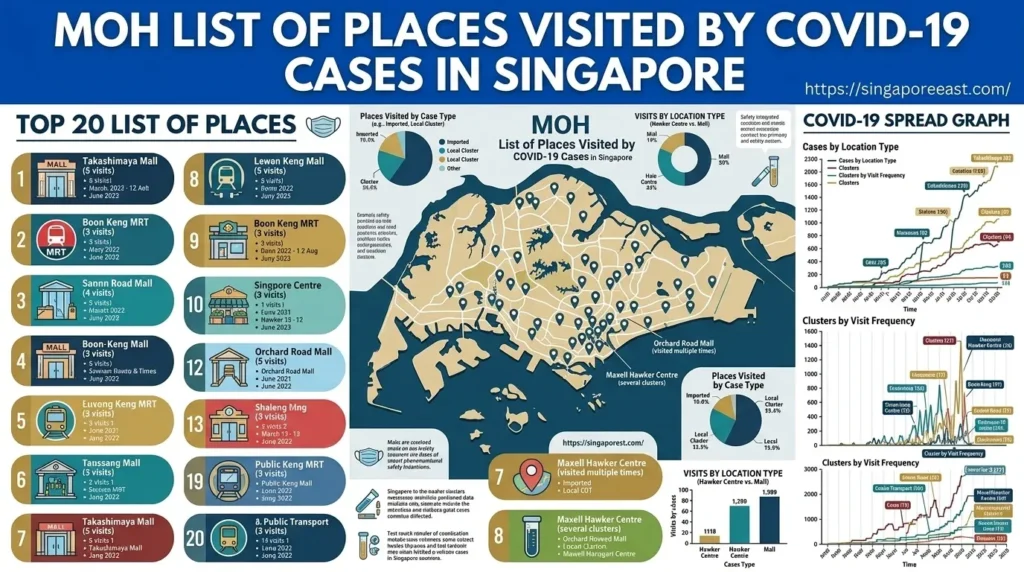
MOH List of Places Visited by COVID-19 Cases in Singapore has played a crucial role in helping residents and visitors stay informed and safe during the pandemic. Released by Singapore’s Ministry of Health (MOH), this list provided transparency about locations visited by confirmed COVID-19 patients during their infectious periods. By informing the public, the government enabled timely precautions, encouraged testing, and minimized community transmission. Understanding how this list was compiled and how it impacted public health measures is essential for anyone studying pandemic response strategies or planning safe travel in Singapore.The proactive approach taken by Singapore ensured that individuals who may have been exposed could monitor their health and seek medical attention if necessary.
Understanding the MOH List of Places Visited by COVID-19 Cases in Singapore
The MOH list of places visited by COVID-19 cases in Singapore was regularly updated during the pandemic. It included public locations where infected individuals had been present for extended periods. These updates helped residents assess their risk and take appropriate preventive measures.
- Transparency: Keeping the public informed about potential exposure sites.
- Early Detection: Encouraging individuals who visited these locations to monitor symptoms.
- Preventive Action: Prompting enhanced cleaning and disinfection.
- Public Confidence: Building trust in government health measures.
- Contact Tracing Support: Complementing digital tools like TraceTogether and SafeEntry.
How the MOH Compiled the List
The MOH list of places visited by COVID-19 cases in Singapore was carefully compiled through rigorous epidemiological investigation.
- Patient Interviews: Confirmed cases were interviewed to determine their movement history.
- Digital Contact Tracing: Utilization of TraceTogether and SafeEntry systems.
- CCTV and Transaction Records: Verification of patient movements.
- Collaboration with Businesses: Ensuring accurate timelines and locations.
Types of Locations Included
Before exploring specific examples, it is important to understand the variety of places that appeared on the MOH list of places visited by COVID-19 cases in Singapore. These locations reflected everyday activities, demonstrating how easily the virus could spread in community settings.
- Shopping Malls: High foot traffic areas such as retail centers.
- Supermarkets: Essential service locations visited frequently.
- Restaurants and Cafes: Dining establishments with close interpersonal interactions.
- Public Transport: MRT stations and bus interchanges.
- Healthcare Facilities: Clinics and hospitals.
- Workplaces: Offices and industrial sites.
Notable Examples from the MOH List
Before presenting the bullet points, it is essential to note that the inclusion of a location did not necessarily mean a high risk of transmission. Instead, it served as a precautionary measure to encourage vigilance and responsible behavior among the public.
- Jewel Changi Airport
- Mustafa Centre
- Tampines Mall
- VivoCity
- Bugis Junction
- NEX Shopping Mall
- White Sands Mall
- Hougang Mall
- Sheng Siong Supermarkets
- FairPrice Outlets
- IKEA Alexandra
- Chinatown Complex
- Paya Lebar Square
- Raffles City Shopping Centre
- Suntec City
Public Health Measures Following the MOH List
Public Health Measures Following the MOH List were essential in controlling the spread of COVID-19 in Singapore and ensuring community safety. After the release of the MOH list of places visited by COVID-19 cases in Singapore, authorities implemented enhanced cleaning and disinfection at affected locations, along with timely public advisories. Individuals who had visited these places during specified times were encouraged to monitor their health, undergo testing if necessary, and seek medical attention if symptoms appeared.
Enhanced Cleaning and Disinfection
Enhanced Cleaning and Disinfection played a vital role in minimizing the risk of COVID-19 transmission at locations identified in the MOH list of places visited by COVID-19 cases in Singapore. Once a site was listed, authorities and business owners carried out thorough sanitization using approved disinfectants, focusing on high-touch surfaces such as door handles, elevators, and restrooms. These measures were conducted in accordance with the Ministry of Health and National Environment Agency guidelines to ensure public safety.
Health Monitoring and Testing
Individuals who had visited the listed locations during specified times were advised to:
- Monitor their health for 14 days.
- Seek medical attention if symptoms developed.
- Undergo COVID-19 testing when recommended.
Community Awareness
Community Awareness played a crucial role in strengthening Singapore’s response to the pandemic following the release of the MOH list of places visited by COVID-19 cases in Singapore. Public access to timely and transparent information empowered residents to stay vigilant, monitor their health, and adopt preventive measures such as mask-wearing and hand hygiene. Government campaigns and digital platforms further enhanced awareness by educating the community about safety protocols and responsible behavior.
Role of Digital Technology
Role of Digital Technology was instrumental in enhancing Singapore’s ability to manage the pandemic effectively. Following the release of the MOH list of places visited by COVID-19 cases in Singapore, digital tools such as TraceTogether and SafeEntry enabled rapid and accurate contact tracing. These technologies helped authorities identify potential exposures, notify affected individuals promptly, and reduce the spread of the virus.
TraceTogether
- Bluetooth-based contact tracing.
- Enabled rapid identification of close contacts.
- Reduced reliance on memory-based interviews.
SafeEntry
- Digital check-in system at public venues.
- Provided accurate visitation records.
- Assisted in efficient outbreak investigations.
Impact on Businesses and the Economy
The MOH list of places visited by COVID-19 cases in Singapore had both short-term and long-term effects on businesses.
Short-Term Effects
- Temporary closures for cleaning.
- Reduced customer footfall.
- Operational disruptions.
Long-Term Benefits
- Improved hygiene standards.
- Increased adoption of digital solutions.
- Enhanced consumer trust in safety measures.
Public Response and Community Cooperation
Singapore’s residents responded positively to the MOH list of places visited by COVID-19 cases in Singapore. The public demonstrated high levels of compliance with health advisories, contributing to the country’s effective containment of the virus.
- Clear and consistent communication.
- Trust in government institutions.
- Strong legal framework supporting public health measures.
- Community solidarity and responsibility.
Differences Between Close Contact and Casual Exposure
Understanding the distinction between close contact and casual exposure is essential when interpreting the MOH list of places visited by COVID-19 cases in Singapore.
- Being within 2 meters of an infected person for a prolonged period.
- Direct physical interaction.
- Higher risk of transmission
- Visiting the same location without direct interaction.
- Lower risk of infection.
Lessons Learned from Singapore’s Approach
The MOH list of places visited by COVID-19 cases in Singapore offers valuable lessons for global public health management.
- Transparency Builds Trust: Open communication encourages public cooperation.
- Technology Enhances Efficiency: Digital tools accelerate contact tracing.
- Community Responsibility Matters: Collective action is vital in controlling outbreaks.
- Preparedness is Essential: Strong healthcare infrastructure ensures rapid response.
Relevance in the Post-Pandemic Era
Although the pandemic has largely subsided, the MOH list of places visited by COVID-19 cases in Singapore remains a significant case study in crisis management. It serves as a model for handling future infectious disease outbreaks and emphasizes the importance of preparedness and resilience.
- Pandemic preparedness planning.
- Public health policy development.
- Academic research and education.
- Travel and tourism safety strategies.
The Top 10 Things to do in Singapore offer an exciting blend of modern attractions, cultural experiences, and natural beauty, making the city-state a must-visit destination for travelers. From exploring the futuristic Gardens by the Bay and enjoying panoramic views at Marina Bay Sands to immersing yourself in the vibrant streets of Chinatown and Little India, each experience showcases Singapore’s unique charm. Visitors can also indulge in world-class shopping on Orchard Road and savor delicious local cuisine at famous hawker centers. Whether you’re traveling with family, friends, or as a couple, the Top 10 Things to do in Singapore promise unforgettable memories in this dynamic and multicultural city.
FAQs
What is the MOH list of places visited by COVID-19 cases in Singapore?
It is a publicly released list of locations visited by confirmed COVID-19 patients during their infectious periods.
Does visiting a listed location mean I was infected?
No, it only indicates potential exposure. Individuals were advised to monitor their health.
How often was the list updated?
The Ministry of Health updated the list regularly as new cases were investigated and verified.
Are these locations still considered risky today?
No, the listed locations were thoroughly disinfected, and the information is now primarily of historical.
Conclusion
The MOH list of places visited by COVID-19 cases in Singapore stands as a testament to Singapore’s proactive and transparent approach to managing the pandemic. By providing timely and accurate information, the government empowered individuals to take responsibility for their health while supporting national containment efforts. The integration of technology, strong public cooperation, and effective communication ensured the success of this initiative.Beyond its immediate impact, the list offers valuable insights into effective pandemic management strategies. It highlights the importance of preparedness, transparency, and community engagement in addressing public health crises.