

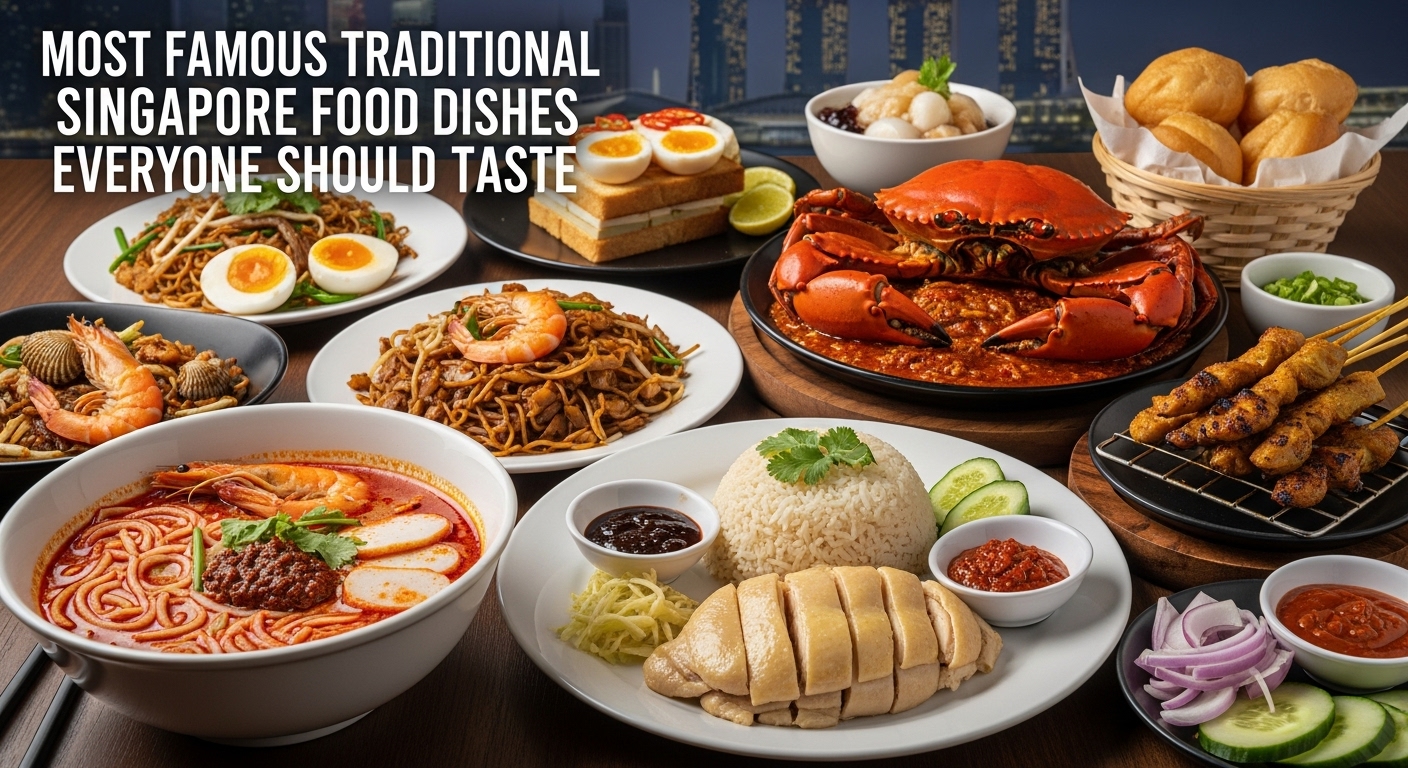
If you’re searching for the most authentic flavours of Southeast Asia, traditional Singapore food is one of the richest culinary experiences you can explore. Singapore’s cuisine blends Chinese, Malay, Indian, and Peranakan influences — creating bold, aromatic, and deeply satisfying dishes that reflect the country’s multicultural identity.
People search for this topic with informational intent: they want to know which dishes are famous, what they taste like, and why they matter. So let’s answer that directly.
Traditional Singapore food is known for its balanced flavours — sweet, spicy, savoury, smoky, and tangy — often served in hearty portions and prepared with techniques passed down for generations. From hawker centres to heritage restaurants, these dishes remain cultural icons and national treasures.
This guide explores Singapore’s most famous traditional foods, why they’re loved, how they’re made, and which ones every visitor should try at least once.
What Are the Most Famous Traditional Singapore Food Dishes?
| Dish Name | Origin Influence | Taste Profile | Why It’s Popular |
|---|---|---|---|
| Hainanese Chicken Rice | Chinese-Hainanese | Light, savoury | Singapore’s national dish |
| Laksa | Peranakan | Spicy, creamy | Iconic noodle soup |
| Chili Crab | Chinese & Malay | Sweet–spicy | World-famous seafood |
| Char Kway Teow | Chinese | Smoky, savoury | Wok hei flavour |
| Nasi Lemak | Malay | Coconut-rich | Affordable & customisable |
| Satay | Malay | Smoky, sweet | Perfect street snack |
| Roti Prata | Indian-Muslim | Crispy, soft | 24/7 comfort food |
| Bak Kut Teh | Chinese-Teochew | Peppery broth | Comforting soup |
| Hokkien Mee | Chinese | Seafood-rich | Umami-packed noodles |
These are the dishes locals recommend most — and the ones tourists fall in love with.
Hainanese Chicken Rice

Hainanese chicken rice is often called Singapore’s national dish due to its simplicity, balance, and universal appeal.
What It Is
Poached chicken served with fragrant rice cooked in chicken broth, ginger, and garlic — paired with chilli sauce, ginger paste, and dark soy.
Why It’s Famous
- Light but deeply flavourful
- Loved by locals of every race
- Found in nearly every hawker centre
- Recognised by Anthony Bourdain and international chefs
Taste Profile
- Soft, juicy chicken
- Aromatic oily rice
- A spicy-tangy chilli sauce that brings everything together
Pro Tip
Always try it from a Hainanese hawker stall — these use traditional poaching methods that keep the meat silky and tender.
Laksa
Laksa stands out for its rich coconut broth and fragrant spices, making it one of Singapore’s boldest noodle dishes.
What It Is
Rice noodles served in a spicy coconut milk gravy made with dried shrimp, lemongrass, turmeric, and chilli.
Variants in Singapore
- Katong Laksa (cut noodles; eaten with spoon only)
- Curry Laksa (creamier and richer)
Why It Matters
Laksa is a signature of Peranakan culture, an important part of Singapore’s culinary heritage.
Taste Profile
- Creamy
- Spicy
- Savoury
- Slightly sweet
Who Will Love It
Anyone who enjoys curry-like flavours or spicy noodle soups.
Chili Crab

Chili crab is internationally recognised as Singapore’s signature seafood dish, known for its sweet-spicy gravy and fresh crab.
What It Is
Fresh mud crab stir-fried in a sweet, spicy, tangy tomato-and-chili-based sauce.
Why It’s World-Famous
- Listed as a “World’s Top 50 Dishes” by CNN
- A must-try for tourists
- Usually served in large seafood restaurants along the coast
Taste Profile
- Thick, glossy gravy
- Balanced sweetness and heat
- Best enjoyed with fried mantou buns
Tip for First-Timers
Wear the gloves. Chili crab is meant to be messy — and delicious.
Char Kway Teow
Char kway teow is loved for its smoky aroma, rich soy flavours, and satisfying texture.
What It Is
Flat rice noodles stir-fried with egg, Chinese sausage, bean sprouts, cockles, and dark soy sauce.
Why It’s Unique
It’s cooked using wok hei — a high-heat wok technique that gives noodles a smoky charred flavour.
Taste Profile
- Smoky
- Slightly sweet
- Chewy and soft
- Umami-packed
Best For
Fans of dark, caramelised noodle dishes.
Nasi Lemak
Nasi lemak is Malaysia’s national dish, but Singapore’s version has its own local twist and is a hawker favourite.
What It Is
Coconut-infused rice served with sambal, fried chicken, anchovies, egg, cucumber, and peanuts.
Why Singapore Loves It
- Affordable
- Quick to eat
- Flexible toppings
Taste Profile
- Fragrant citrusy rice
- Spicy sambal
- Crispy and savoury sides
What Makes It “Singapore Style”
Many stalls offer fried chicken wings with a crisp, golden coating — a local favourite.
Satay

Satay is a beloved Malay snack made from marinated meat grilled over charcoal.
What It Is
Chicken, beef, or mutton skewers served with peanut sauce, ketupat (rice cakes), onions, and cucumber.
Why It Stands Out
- Low-cost street snack
- Charcoal grilling gives intense flavour
- Popular at night markets and hawker centres
Taste Profile
- Sweet
- Smoky
- Slightly spicy
- Nutty from the peanut dip
Perfect For
Groups, parties, and late-night snacking.
Roti Prata
Roti prata is one of Singapore’s most popular Indian-Muslim dishes, known for its flaky texture and endless variations.
What It Is
A crisp, pan-fried flatbread served with curry or sugar.
Variants
- Egg prata
- Cheese prata
- Mushroom prata
- Banana prata
Taste Profile
- Crispy on the outside
- Soft inside
- Served with spicy fish or dhal curry
Why It’s Famous
Because it’s cheap, comforting, and available 24/7 at most eateries.
Bak Kut Teh
Bak kut teh is a traditional Chinese soup known for its peppery broth and fall-off-the-bone pork ribs.
What It Is
Pork ribs simmered for hours with pepper, garlic, and herbs.
Why Singapore’s Version Is Unique
Singapore’s Teochew-style bak kut teh is lighter, clearer, and more pepper-forward compared to the Malaysian version.
Taste Profile
- Strong pepper kick
- Garlicky
- Comforting
- Best enjoyed with rice or dough fritters (youtiao)
Best For
Cold rainy days — or whenever you want comfort food.
Hokkien Mee
Hokkien mee is a seafood-forward noodle dish that stands out for its rich prawn broth and wok-fried depth.
What It Is
Yellow noodles and rice noodles stir-fried with prawns, squid, pork, eggs, and sambal.
Why It’s a Favourite
The noodles are simmered in a seafood broth before frying — giving it deep umami.
Taste Profile
- Savoury
- Briny
- Slightly smoky
- Creamy texture from the egg
What Locals Recommend
Always squeeze the lime over it — the acidity lifts the flavours beautifully.
Why Is Traditional Singapore Food So Diverse?
Cultural Influences Behind Traditional Singapore Food
| Culture | Key Contributions | Famous Dishes |
|---|---|---|
| Chinese | Soups, noodles, rice dishes | Hainanese chicken rice, bak kut teh |
| Malay | Sambal, coconut, spices | Nasi lemak, satay |
| Indian-Muslim | Curries, breads | Roti prata, biryani |
| Peranakan | Fusion herbs + spices | Laksa, ayam buah keluak |
Traditional Singapore food is diverse because it reflects a blend of Chinese, Malay, Indian, and Peranakan cultures — all of which shaped the nation’s identity.
Key Historical Influences
- Chinese immigrants introduced soups, rice dishes, and stir-fries
- Malay communities shaped sambal, coconut rice, and spice-based dishes
- Indian-Muslim traders influenced curries, prata, and biryani
- Peranakan families created fusion dishes like laksa and ayam buah keluak
The Result
A food culture that is:
- Layered
- Aromatic
- Varied
- Vibrant
- Accessible to everyone
What Makes Traditional Singapore Food Healthy or Unhealthy?

Traditional Singapore food can be both healthy and indulgent depending on ingredients, cooking methods, and portion size.
Healthier Dishes
- Hainanese chicken rice (lean protein)
- Yong tau foo (customisable vegetables)
- Thunder tea rice (green herbs + vegetables)
More Indulgent Options
- Char kway teow (fried in lard)
- Chili crab (sugary sauce)
- Roti prata (high in refined carbs & oil)
Tips for Eating Healthier
- Request less oil
- Skip sugary drinks
- Add side vegetables
- Share large dishes
Where Can You Try the Best Traditional Singapore Food?

The best places to try traditional Singapore food are hawker centres — affordable, authentic, and full of history.
Top Locations
- Maxwell Food Centre
- Lau Pa Sat
- Old Airport Road Hawker Centre
- Chinatown Complex
- Tiong Bahru Market
These places host award-winning stalls recognised by the Michelin Guide.
How to Choose What to Eat in Singapore
Use this quick decision guide:
If You Like Spicy Food
- Laksa
- Chili crab
- Nasi lemak
If You Prefer Mild Flavours
- Hainanese chicken rice
- Bak kut teh
If You Love Noodles
- Char kway teow
- Hokkien mee
If You Want Something Quick
- Satay
- Roti prata
Are These Traditional Singapore Food Dishes Halal?
Some are, some aren’t.
Generally Halal-Friendly
- Satay
- Nasi lemak
- Roti prata
- Malay kuih
Not Halal
- Bak kut teh (pork)
- Char kway teow (often cooked with lard + cockles)
- Hokkien mee (pork stock)
Halal Alternatives Exist
Singapore has many Muslim-friendly hawker centres and halal-certified stalls offering similar flavours.
What’s the Best Way to Explore Traditional Singapore Food?
The best way is to visit hawker centres, follow local recommendations, and try dishes from different cultures.
Suggested Food Trail (Beginner-Friendly)
- Start with Hainanese chicken rice
- Try a bowl of laksa
- Share a plate of char kway teow
- End the night with satay or roti prata
This gives you a complete multicultural flavour experience in one day.
Conclusion
Traditional Singapore food isn’t just about taste — it’s a cultural experience that reflects the country’s Chinese, Malay, Indian, and Peranakan heritage. From iconic dishes like Hainanese chicken rice and laksa to street favourites like satay and roti prata, each plate tells a story of generations, migration, and local traditions. These flavours continue to shape Singapore’s identity and remain a key reason why the city is known as one of the world’s top food destinations.
Whether you’re a first-time visitor or a curious foodie exploring Asian cuisine, these traditional dishes offer the perfect introduction to Singapore’s culinary world. At Singapore East, we love showcasing these timeless flavours and helping readers discover the best of Singapore’s authentic food culture. Happy eating!
FAQs
1. What is the most famous traditional Singapore food?
The most famous traditional Singapore food is Hainanese chicken rice. It’s often called Singapore’s national dish and is loved for its fragrant rice, tender chicken, and spicy chilli sauce.
2. What traditional Singapore food should first-time visitors try?
First-time visitors should try laksa, chili crab, satay, nasi lemak, char kway teow, and roti prata. These dishes represent Singapore’s multicultural flavours and are widely available at hawker centres.
3. Is traditional Singapore food spicy?
Some dishes are spicy — like laksa, chili crab, nasi lemak, and sambal-based meals — but many popular options such as chicken rice and bak kut teh are mild and suitable for everyone.
4. Where can I find the best traditional food in Singapore?
The best places to try traditional Singapore food are hawker centres such as Maxwell, Lau Pa Sat, Old Airport Road, Chinatown Complex, and Tiong Bahru Market. These offer authentic flavours at affordable prices.
5. Is traditional Singapore food halal?
Some dishes are halal-friendly, including nasi lemak, satay, roti prata, and many Malay dishes. However, bak kut teh (pork) and many versions of char kway teow and Hokkien mee are not halal. Halal-certified stalls are widely available.
6. Why is Singapore food so diverse?
Singapore food is diverse because it blends Chinese, Malay, Indian, and Peranakan culinary influences. Each culture contributes unique spices, cooking styles, and flavours, creating a rich food landscape.
7. What is the best time to eat at hawker centres?
The best time to eat at hawker centres is during lunch or early dinner, when most stalls are open and food is freshly prepared. Some famous stalls also sell out early.
8. How much does traditional Singapore food cost?
Most traditional dishes cost SGD 4–8 at hawker centres. Premium seafood dishes like chili crab can cost more, depending on size and restaurant.
9. Are there vegetarian options in traditional Singapore cuisine?
Yes, popular vegetarian-friendly options include vegetarian bee hoon, thunder tea rice, roti prata (without meat), tofu dishes, and many Chinese and Indian vegetarian meals.
10. What makes hawker food unique in Singapore?
Hawker food is unique because it combines heritage recipes, low prices, and high-quality cooking — many stalls have been run by the same families for decades and are even Michelin-recognised.