Isaac
Isaac 
There are four commercially recognised species of coffee beans: Arabica, Robusta, Liberica, and Excelsa. Arabica accounts for about 60% of global coffee production and is the dominant bean in specialty cafes worldwide. Robusta makes up about 35% of production and is prized for its higher caffeine content and crema production. Liberica and Excelsa together account for less than 5% of global supply, though Liberica has historical significance in Malaysia and parts of Southeast Asia, where it was widely grown after a coffee blight wiped out Arabica crops in the late 19th century.
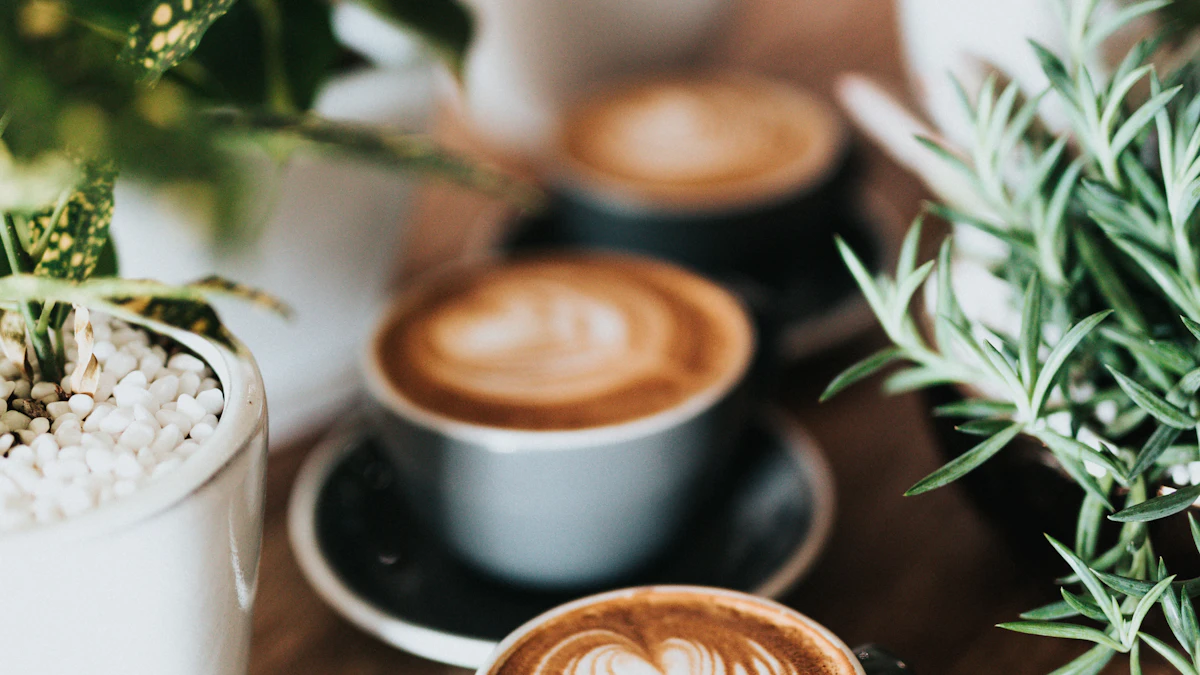
In Singapore specifically, the coffee landscape runs on two parallel tracks: the traditional kopi culture (using Robusta beans roasted with butter and sugar, brewed through a sock filter) and the specialty coffee scene (predominantly Arabica, third-wave roasting, filter or espresso methods). This guide explains what each coffee bean type is, how it tastes, and where it fits in Singapore’s coffee culture, with a comparison table and buying guide at the end.
The 4 Types of Coffee Beans
1. Arabica (Coffea arabica)
Arabica is the most widely consumed coffee species in the world. It grows at high altitudes — typically 600 to 2,200 metres above sea level — in regions with consistent rainfall and moderate temperatures. Major producing countries include Ethiopia, Colombia, Brazil, Guatemala, and Kenya. Arabica beans are oval-shaped with a curved crease running lengthwise.
Taste: Arabica is characterised by a wide flavour range — from bright, citrus-like acidity (Ethiopian and Kenyan varieties) to chocolate and nutty sweetness (Brazilian and Colombian varieties). Arabica has less caffeine than Robusta (about 1.2–1.5% by weight) and a more complex, nuanced flavour profile. It is the bean used in most specialty coffee sold in Singapore’s third-wave cafes.
- Best for: Filter coffee, pour-over, AeroPress, flat white, latte
- Caffeine content: 1.2–1.5%
- Flavour notes: Fruit, citrus, floral, chocolate, caramel (varies by origin)
- Price in Singapore: SGD $20–$45 per 200g bag from specialty roasters
2. Robusta (Coffea canephora)
Robusta is the second most commercially important coffee species. It grows at lower altitudes (sea level to 600 metres), tolerates heat and humidity well, and produces higher yields than Arabica — making it a more robust crop (hence the name). Major producing regions include Vietnam, Indonesia, Uganda, and India. Vietnam is the world’s largest Robusta producer.
Taste: Robusta has a stronger, harsher, and more bitter flavour than Arabica, with earthy and woody notes and very low acidity. It has nearly twice the caffeine content of Arabica (2.2–2.7%), which contributes to its bitterness. Robusta produces a thicker, longer-lasting crema in espresso, which is why Italian espresso blends typically include 20–30% Robusta. In Singapore, the traditional kopi you find at kopitiam coffee stalls is made from Robusta beans roasted with sugar and butter (the Hainanese kopi style).
- Best for: Traditional kopi (kopitiam), espresso blends, instant coffee
- Caffeine content: 2.2–2.7%
- Flavour notes: Earthy, woody, bitter, chocolate
- Price in Singapore: SGD $5–$15 per 500g pack (kopitiam beans); SGD $18–$30 per 200g (specialty Robusta)
3. Liberica (Coffea liberica)
Liberica is a rare coffee species grown primarily in Malaysia, Philippines, and a few other Southeast Asian countries. It was historically important in the late 19th century when Coffee Leaf Rust (Hemileia vastatrix) devastated Arabica plantations across Asia, and Liberica was introduced as a disease-resistant replacement. Today it remains the dominant bean in Malaysian kopi tradition, where it is known as kopi kampung or “village coffee.”
Taste: Liberica has a bold, full-bodied, and sometimes smoky flavour with a distinctive woody or floral aroma. Some describe it as having a slightly “fruity” or “jackfruit-like” quality. It is an acquired taste — rounder and less sharp than Robusta, but with a unique character that Arabica lacks. If you have had traditional Malaysian coffee (kopi at a mamak stall or in Ipoh), you have likely tasted Liberica.
- Best for: Traditional Malaysian-style kopi, blending with Robusta
- Caffeine content: 1.2–1.5% (similar to Arabica)
- Flavour notes: Smoky, woody, full-bodied, slightly fruity
- Availability in Singapore: Specialist kopitiam suppliers; limited at specialty cafes
4. Excelsa (Coffea liberica var. dewevrei)
Excelsa was reclassified as a variety of Liberica in 2006 (previously considered a separate species). It grows almost exclusively in Southeast Asia — primarily in the Philippines, Vietnam, and Laos. Excelsa accounts for less than 2% of global coffee production and is rarely found outside the region.
Taste: Excelsa is unusual in that it combines tart, fruity top notes (similar to a light Arabica) with a dark, roasty body (more like Robusta). It is primarily used in blends to add complexity and a distinctive aroma rather than brewed as a standalone single-origin coffee. In Singapore, Excelsa is occasionally included in Malaysian-style coffee blends for its aromatic contribution.
- Best for: Blending; occasionally single-origin filter
- Caffeine content: Low (similar to Arabica)
- Flavour notes: Tart, fruity, dark roast body, aromatic
- Availability in Singapore: Rare; available from a few specialty importers
Coffee Bean Types Compared
| Bean | Share of Global Production | Caffeine | Acidity | Flavour Profile | Best Brewing Method |
|---|---|---|---|---|---|
| Arabica | ~60% | 1.2–1.5% | High | Fruit, floral, chocolate, caramel | Filter, pour-over, espresso, flat white |
| Robusta | ~35% | 2.2–2.7% | Low | Earthy, bitter, woody, chocolate | Espresso blends, traditional kopi |
| Liberica | <3% | 1.2–1.5% | Medium | Smoky, woody, full-bodied, fruity | Malaysian kopi, blends |
| Excelsa | <2% | Low | Medium-high | Tart, dark roast, aromatic | Blends, specialty filter |
Coffee Bean Types in Singapore: Kopi vs Specialty
Singapore’s coffee culture divides clearly into two categories, each using different beans:
Traditional kopi (kopitiam): Uses Robusta beans — and sometimes Liberica — roasted with sugar and butter in the Hainanese style. The beans are dark-roasted until coated in caramelised sugar, producing a thick, bittersweet, low-acid brew. A cup of kopi at a hawker centre costs SGD $1.00 to $1.80. This is the coffee most Singaporeans grew up with. Famous kopitiam brands include Ya Kun Kaya Toast, Toast Box, and Killiney Kopitiam, all of which use proprietary Robusta blends from traditional local roasters.
Specialty coffee (third-wave cafes): Uses single-origin Arabica beans, typically sourced from Ethiopia, Colombia, Guatemala, or Indonesia. Beans are roasted to medium or light profiles that preserve the origin flavours. A flat white at a specialty cafe in Singapore costs SGD $6.50 to $8.50. Common Man Coffee Roasters, Nylon Coffee Roasters, and PPP Coffee are among the most established specialty roasters in Singapore.
Where to Buy Coffee Beans in Singapore
| Type | Where to Buy | Price Range |
|---|---|---|
| Arabica (specialty) | Nylon Coffee, Common Man Coffee Roasters, PPP Coffee, Homeground | SGD $22–$45 per 200g |
| Robusta (kopitiam style) | Tiong Hoe Specialty Coffee, Sin Chong Huat, local wet markets | SGD $5–$15 per 500g |
| Liberica | JB Kee Coffee (Malaysia border), specialist importers | SGD $12–$20 per 500g |
| Blended kopi beans | NTUC FairPrice, Cold Storage, Sheng Siong | SGD $5–$10 per 500g |
| Online (all types) | RedMart, Lazada, Shopee | Varies |
Arabica vs Robusta: The Most Common Comparison
The most frequently searched comparison is Arabica vs Robusta. Here is the plain answer: Arabica is smoother, more acidic, and has more complex flavour — suitable for people who want to taste the nuances of where the coffee was grown. Robusta is stronger, more bitter, and has more caffeine — suitable for people who want a powerful coffee hit, whether in a traditional kopi or a strong espresso.
Neither is objectively better. If you drink coffee primarily for flavour and enjoy exploring origins, Arabica from a specialty roaster is the natural choice. If you drink coffee for energy and grew up with kopitiam kopi, Robusta is what you want — and what most Singapore coffee drinkers default to.
Frequently Asked Questions
What type of coffee bean does Singapore kopi use?
Traditional Singapore kopi uses Robusta beans, roasted in the Hainanese style with sugar and butter until the beans are dark and coated in caramelised sugar. Some older roasters also blend in Liberica beans for a fuller body. This differs from specialty coffee cafes, which use Arabica beans.
What is the strongest coffee bean type in terms of caffeine?
Robusta has the highest caffeine content at 2.2–2.7% by dry weight. Arabica contains 1.2–1.5%. Caffeine is partially responsible for Robusta’s more bitter flavour, as caffeine itself tastes bitter.
Which coffee bean is best for espresso?
Most commercial espresso blends use a combination of Arabica and Robusta. Arabica provides flavour complexity and sweetness; Robusta contributes body, caffeine, and a denser crema. Single-origin Arabica espresso is increasingly popular in specialty cafes but requires precise extraction to avoid bitterness.
Is Liberica coffee available in Singapore?
Liberica is not widely available in Singapore’s retail market, but it can be found from specialist kopitiam suppliers, some traditional coffee roasters, and occasionally at Malaysian food importers in Johor Bahru. It is more commonly encountered if you visit traditional kopitiams in Ipoh, Malaysia, where Liberica is a standard ingredient in local coffee blends.